Sunday, July 22, 2018

Long Term Effectiveness of Tolvaptan, PKD Foundation Launches PKD Connect, Dialysis Providers Facing Legislative Challenges in Ohio & California

PKD Treatment

From Eureka Alert, Source: AMERICAN SOCIETY OF NEPHROLOGY
Study reveals long-term effectiveness of therapy for common cause of kidney failure
Highlights

Among individuals with autosomal dominant polycystic kidney disease, those who were treated with tolvaptan for up to 11 years had a slower rate of kidney function decline compared with historical controls.

Annualized kidney function decline rates of tolvaptan-treated patients did not change during follow-up.


Washington, DC (July 19, 2018) -- New research provides support for the long-term efficacy of a drug used to treat in patients with autosomal dominant polycystic kidney disease (ADPKD), a common cause of kidney failure. The findings appear in an upcoming issue of the Clinical Journal of the American Society of Nephrology (CJASN).

The hormone vasopressin promotes the progression of ADPKD, the fourth leading cause of end stage kidney disease. In the three-year TEMPO 3:4 and in the one-year REPRISE phase 3 clinical trials, tolvaptan (a vasopressin receptor antagonist) slowed the decline of kidney function in patients with ADPKD at early and later stages of chronic kidney disease, respectively. The results suggest that tolvaptan might delay the need for dialysis or kidney transplantation, provided that its effect on kidney function decline is sustained and cumulative over time, beyond the relatively short duration of TEMPO 3:4 and REPRISE. Because all patients participating in these clinical trials were given the opportunity of continuing tolvaptan in an open-label extension study, investigators have now gathered information on the long-term efficacy of tolvaptan.

A team led by Vicente Torres, MD, PhD (Mayo Clinic) retrospectively analyzed information on 97 ADPKD patients treated with tolvaptan for up to 11 years at the Mayo Clinic. Kidney function was measured as estimated glomerular filtration rate (eGFR).

The investigators found that patients treated with tolvaptan had lower eGFR slopes compared with controls (-1.97 vs -3.50 ml/min per 1.73 m2 per year) and a lower risk of a 33% reduction in eGFR from baseline. Also, the annualized eGFR slopes of patients treated with tolvaptan did not change with the duration of follow-up. The team also compared the eGFR values observed at the last follow-up in the tolvaptan treated patients to the anticipated last follow-up eGFR values, estimated using a previously validated predictive equation. Differences between observed and predicted eGFRs at last follow-up increased with duration of treatment, suggesting that the beneficial effect of tolvaptan on the eGFR accumulates over time.

"The results of the study suggest that the effect of tolvaptan on eGFR in patients with ADPKD is sustained, cumulative, and consistent with potentially delaying the need of kidney replacement," said Dr. Torres.


PKD Foundation

From PKD Foundation

PKD Connect: a new online resource for anyone impacted by polycystic kidney disease

We are proud to introduce an important new resource for anyone impacted by polycystic kidney disease (PKD). It’s a web portal called PKD Connectwhere you can find information about the disease, nutrition tips, pain management advice or just a shoulder to lean on when you need it most.

When you connect, you won’t face PKD alone.

Whether you are looking for information or empathy, PKD Connect is a great starting point. Nowhere else will you discover so many ways to connect with other patients, families and caregivers who know exactly what you’re going through because they’ve been through it themselves. At PKD Connect, these programs and resources mean no one faces PKD alone:

Peer Mentor Program
PKD Hope Line
Online Community
Disease Management Resources

Connect with us today:
connect.pkdcure.org
844.PKD.HOPE
pkdconnect@pkdcure.org


PKD Foundation Research Update

PKD Research Grants
This year, we are awarding 15 research grants to outstanding PKD scientists through our Research Grant Program. We will spend more than $2 million over the next two years on these projects.

The awardees represent top researchers and physician scientists in the field. And included in this list is our first-ever Australian grantee! We are proud to collaborate with the PKD Foundation of Australia to co-fund this grant and are committed to our global alliance to grow PKD research to find more treatments. Meet our grants recipients at pkdcure.org/grants.

PKD Fellowships
In addition to our grants, we have also selected two young researchers as recipients of our PKD Foundation Fellowships. These fellowships recognize early-career scientists whose initial achievements and potential identify them as rising stars in the PKD field. This program is key to bringing in the next generation of scientists who are critical to the future of PKD research. Each fellow will receive $60,000 a year for two years, totaling nearly a quarter of a million dollars. Meet our fellows at pkdcure.org/fellowships.

Thanks to your support, these investments will propel critical research to deepen our understanding of the genetic and pathological processes involved in PKD and accelerate the development of more treatments for PKD patients.

Thanks again for all you do to support our mission and make a difference in the lives of everyone impacted by PKD.

Sincerely,

David Baron, Ph.D.
Chief Scientific Officer


Dialysis Issues

From The Blade, Toledo, OH, By Lauren Lindstrom

Proposed Ohio Constitution amendment would restrict kidney dialysis centers


A proposed constitutional amendment that would restrict profits and increase regulations at Ohio outpatient dialysis centers is one step closer to getting on November’s ballot, pending certification of enough valid signatures to qualify.

The Kidney Dialysis Patient Protection Amendment is backed by Ohioans for Kidney Dialysis Patient Protection, an offshoot of a similar initiative California voters will consider in November. Supporters say it provides necessary regulations to a highly profitable industry, while opponents warn it would threaten patient care and close treatment centers.

“We’re already very regulated. It’s redundant,” said Diane Wish, president of the Ohio Renal Association, the trade group representing the 326 outpatient dialysis clinics in the state. “If the goal is to make dialysis more affordable for patients it’s not doing it. It’s not going back to the patient.”

The proposal would cap revenue from treatment at 115 percent of “direct patient care services costs and all health care quality improvement costs.” Dialysis centers that charge beyond that would be required to provide rebates to insurers and would face fines for noncompliance.

It would also require the state to inspect kidney dialysis centers annually, reviewing compliance for processes such as handling and disposal of biohazardous waste, cleaning and maintenance of equipment, and adherence to patient-care plans.

The 349 Ohio Department of Health-licensed dialysis centers in the state are on a three-year schedule in line with federal guidelines, said J.C. Benton, state health department spokesman.

The pro-amendment group, backed by the Service Employees International Union, says it has turned in enough petition signatures to put the issue on the statewide ballot, which will be verified by the Ohio Secretary of State’s Office by July 24. At least 305,591 valid signatures are required.

Anthony Caldwell, spokesman for SEIU District 1199 and a member of the petitioner committee, said the amendment will address huge mark-ups dialysis centers charge patients with private insurance and strengthen safety and hygiene regulations.

“We feel like to have that kind of very acute care that you should have that done in the safest, cleanest environment possible,” Mr. Caldwell said, adding the amendment would ensure “the money they are charging is going to care for consumers [so it is] done in safe and sanitary conditions.”

Dialysis is a costly and time-consuming medical procedure used to treat patients with kidney failure, or end-stage renal disease. Patients typically visit such clinics three days a week for about four hours at a time to have their blood extracted, filtered, and returned to their body through a machine. In 2016, about 18,000 Ohioans were on dialysis, according to the Ohio Renal Association.

Both the Ohio and California issues are funded in large part by SEIU-United Healthcare Workers. A coalition of groups against the amendment, under the umbrella Ohioans Against the Reckless Dialysis Amendment, includes the Kidney Foundation of Ohio, Ohio Renal Association, and the Ohio State Medical Association.

Ms. Wish, also a registered nurse and chief executive officer of Centers for Dialysis Care, a chain of nonprofit dialysis providers in northeast Ohio, said proponents of the measure would like people to believe the dialysis industry has no regulation.

It’s something that “could not be any further from the truth,” she said, citing adherence to federal guidelines and state inspections.

By capping revenue, Ms. Wish said it doesn’t make it more affordable for dialysis patients, as rebates go back to the insurance companies.

About 90 percent of dialysis patients have Medicaid or Medicare, she said, both exempt in the proposed amendment. In targeting private insurance, it reduces necessary revenue to offset lower reimbursements from government payers, she said.

She warned the amendment could cause some centers to close or consolidate, especially in rural areas where patient volumes are lower.

“Patients will have to travel farther and transportation is very difficult,” she said, adding that increased travel makes missing treatments and adverse side effects requiring hospitalizations more likely. “It’s just not good for patients.”

Mr. Caldwell said a revenue cap would incentivize dialysis centers to invest money back into direct patient care, which could include increased staffing or other safeguards to improve conditions, rather than giving it to shareholders.

Dialysis centers charge private insurance “a 350-percent markup” from the actual cost of care, far more than government insurers who negotiate rates. That cost is passed on to all private insurance customers, he said.

Mr. Caldwell’s union, which also represents Ohio Department of Health surveyors responsible for inspecting dialysis clinics, said reports of unclean or unsafe conditions warrant this action.

The 2017 U.S. Renal Data System Annual Data Report shows nearly 500,000 Americans received dialysis treatments in 2015. That year, total Medicare spending for beneficiaries with kidney disease was nearly $100 billion, according to the report.


From Sacramento Bee, CA, BY CATHIE ANDERSON

Why one Sacramento family’s $127 million jury award is up for discussion this election year


Sacramento resident Irma Menchaca left her home the morning of June 6, 2008, for kidney dialysis treatment at DaVita University Dialysis Center in Campus Commons. She had begun regular treatments five years earlier because of her end-stage renal disease.

She arrived at the clinic and reported no health complaints, and by 9:45 a.m., she started what should have been a 180-minute treatment. But at 10:40 a.m., Menchaca was found unresponsive. Emergency personnel tried to revive her, but the 57-year-old wife and mother was pronounced dead on site.

Jurors in the wrongful death case in Colorado brought by her family concluded her survivors should receive $127 million in damages.

Yet news of this wrongful death award might never have reverberated to California if the company and a powerful labor union weren’t locked in a high-stakes, multimillion-dollar battle for voter sentiment here.

SEIU-United Healthcare Workers West has poured more than $7.9 million so far into an effort to persuade California voters to approve a statewide proposition that would limit the amount of profits that kidney dialysis companies such as DaVita and Fresenius can keep. Those companies have countered, putting at least $7.2 million into the opposition effort. The measure, now known as Proposition 8, won’t be decided until the November election.

The union and its supporters say the companies are sacrificing quality of patient care and the cleanliness of facilities in pursuit of profits that will wow Wall Street. The companies and their supporters say the SEIU-UHW has been trying unsuccessfully to organize dialysis center workers for years and that their true goal in pushing Prop. 8 is to gain higher wages for potential union members.

The Menchacas’ civil case, however, lent new evidence to SEIU-UHW’s contention that Denver-based DaVita is putting financial interests ahead of patient care.

Filed in federal court in Colorado, the lawsuit lists cardiac arrest as the cause of Menchaca’s death, attributing it to DaVita’s failure to alert Menchaca or her kidney specialist to a change in the acid concentrate DaVita was using to filter waste from her blood, ensure a healthy pH balance and correct any electrolyte abnormalities.

The company saved millions of dollars by switching to a dry acid concentrate called GranuFlo, the lawsuit alleged, and it had been shown that this new formula could lead to a dangerous biochemical imbalance that triggers abnormal heart rhythms and cardiac arrest.

Fresenius, the maker of GranuFlo, had informed DaVita of these dangers as early as 2003, but the company neither informed its patients nor physicians of the risks, and it didn’t stop using the product, according to the suit. If physicians had known, the lawsuit continued, they could have told the clinic staff how to avoid complications.

In March 2012, the U.S. Food and Drug Administration recalled GranuFlo, saying that its use could result in cardiopulmonary arrest and death if prescriptions did not take into account acetate levels. The FDA took corrective action and required Fresenius to include a warning about the prescription problem.

“What did DaVita do to mitigate those risks? Nothing,” plaintiffs’ attorneys Robert Carey and Stuart Paynter wrote in a July 11 op-ed in The Denver Post. “It switched to GranuFlo without telling the treating doctors. ... The reason DaVita acted this way was clear: Treating doctors would have rebelled had they been told that DaVita was using GranuFlo just to save money, with no clinical benefit and, for patients like ours, a 600 percent to 800 percent increase in the risk of cardiac arrest, according to the evidence admitted.”

DaVita’s chief medical officer, Allen R. Nissenson, defended his company in another July op-ed: “Strikingly, this lawsuit centers not on the product itself, but on the way we communicated to caregivers about GranuFlo, a powdered product that has been used in tens of millions of dialysis treatments over 25 years, and continues to be used in tens of millions of treatments today. The verdict is shocking when you consider the actual facts and science in this case. Our teammates did the right things, in the right way, and we would do it again the same way in the future.”

Nissenson described early warnings about GranuFlo as unsubstantiated speculation and said DaVita scores highly on clinical outcomes according to key benchmarks set by the U.S. Centers for Medicare and Medicaid Services.

Jurors, however, connected DaVita’s actions with the deaths of Menchaca and two other people included in the lawsuit — Madera resident Gary Gene Saldana and Chicago-area resident Deborah Hardin, dealing a total judgment of $383.5 million against the company.

SEIU-UHW argues that DaVita and Fresenius have a virtual monopoly in California, owning 72 percent of the clinics in the state, and Prop. 8 is intended to force them to invest more of their profits into patient care.

The initiative requires clinics and their “governing entity” to issue refunds annually to patients or their payers if revenue exceeds 115 percent of the costs of direct patient care and health-care improvements, and it provides for fining clinics that don’t issue refunds within 210 days of the end of a company’s fiscal year.

Because the profit cap is over and above what’s spent on patient care, the union says, companies have no incentive to limit spending on wages, equipment or facilities.

Yahoo Finance reported that DaVita recorded net income of $663.6 million in 2017 and Fresenius $1.3 billion, plus Fresenius’ operating profit margin was 12.4 percent and DaVita’s about 15 percent last year.

The average operating margin for the S&P 500 companies was 11 percent in 2017, according to market analyst Chris Murphy.

“Rather than investing in patients and the workers, they’re sending it (profit) back to their shareholders, their investors,” said SEIU-UHW spokesman Sean Wherley, “and as a result, there is no on-the-ground accountability to both improve the quality of life for these patients and the conditions for them and the workers taking care of them every day.”

Dr. Bryan Wong, a kidney specialist and a medical director for both DaVita and Fresenius, said the company’s centers, especially in California, are highly regarded. Medicare and Medicaid evaluates dialysis clinics on hundreds of requirements, and California has more clinics with four- or five-star ratings than any other state, he said.

He said the SEIU-UHW is putting its campaign to increase wages for dialysis clinic workers ahead of the interests of the roughly 66,000 dialysis patients across the state.

Instead of improving services, he argued that the initiative would ultimately result in clinic closures, making it harder for patients to find one. It’s a challenge to manage, he said, in an industry in which 90 percent of the customers are covered by Medicare or Medi-Cal, programs that don’t cover the full cost of dialysis care.

Opponents of Prop. 8 hired former California legislative analyst Bill Hamm’s economic think tank the Berkeley Research Group to assess the measure’s financial impact, and the report projected that 83 percent of dialysis clinics wouldn’t be able to cover costs if the measure passes.

“No company, either independent or nonprofit, can operate under these conditions,” Wong said. “So what’s going to happen? Patient care is going to suffer.”

Sunday, July 15, 2018

Got Kidney? How Living Donation Works, Get the word out: Radio, Social Media, Dialysis Lawsuits

Kidney Transplant

From Michigan Health, by KEVIN JOY


The most commonly donated organ from living people has a high transplant success rate and little risk to the giver.

Organ and tissue donation from living people makes up about 4 of every 10 donations that take place each year. Kidneys are the most frequently donated organs from living people.

A person may give one of their two kidneys, which provide the necessary function to remove waste from the body.

Such donors fall into two groups, says Randall S. Sung, M.D., a Michigan Medicine transplant surgeon.

“They want to help somebody they care about — a family member, a co-worker, a friend or someone in their church,” Sung says. “And there also are people who want to do something good for a stranger. These are called nondirected donors.”

In either circumstance, the results can be life-changing, with little risk to the donor.

That was the case for 49-year-old Michigan Medicine patient Jeff Lewis, who in December 2000 gave a kidney to his older sister, Jacqueline Lewis-Kemp. He returned to work without incident a few weeks later.

“Your life goes back to normal,” says Lewis, who has written a book about his kidney donation experience. “But you will get the knowledge that you did something to save somebody’s life, and that will be with you forever.”

For recipients, success rates are high: About 1 percent of transplanted kidneys fail within the first month, Sung says. Two percent from living donors fail within the first year.

He spoke more about what the surgery entails:

Facts about kidney transplant

Why might someone need a new kidney?

Sung: It’s always as a result of end-stage renal disease. There are several common causes, including diabetes, hypertension and polycystic kidney disease. Those patients are either on dialysis or will soon need it.

When chronic kidney disease develops, it’s often asymptomatic. It isn’t until a person’s kidney disease is far advanced that they can get swelling, fatigue, nausea or loss of appetite. A patient may have difficulty breathing because their body gets overloaded with fluid because the kidneys aren’t getting rid of it effectively.

What are the benefits of receiving a kidney from a living donor?

Sung: There’s so much of an advantage. They last longer, and they also allow the recipient to be transplanted sooner, thereby avoiding the time they would have to be on the waiting list — which can be as long as eight years.

How does a living donor prepare?

Sung: The biggest step is education and making the decision to donate. There is an evaluation process that involves testing and in-person appointments with everyone on the team. But once a donor is approved, there’s really not a lot they need to do to prepare, other than stay healthy.

Any one person can usually have many compatible donors. It’s usually limited only by blood-type compatibility. Sometimes, there are variables like age or size — younger donor transplants tend to last a little bit longer, for example, and a transplant for a big recipient from a small donor may not last quite as long. But we don’t exclude someone from donating for those reasons.

How does the transplant operation work?

Sung: For both the donor and the recipient, the operation lasts roughly three hours. They typically come in at the same time — even though the operations are staggered. It takes much longer to remove the kidney than to prepare the recipient to implant it. The anesthesiologists put in a nerve block to assist with postoperative pain.

SEE ALSO: 7 Facts Everyone Should Know About Becoming an Organ Donor

Once the kidney is removed from the donor, it gets flushed with preservation solution and packaged in ice. Then it’s brought to the recipient in the operating room where it gets put in.

Do you remove the recipient’s existing kidney?

Sung: We rarely ever remove a kidney. That’s a common idea people have, which is very logical. People are always surprised to hear we don’t touch the recipient’s kidneys. The issue is not that they are causing harm; they’re just not functioning.

We put the transplant lower down in the pelvis. There are other advantages to having it in that location. Their native kidneys just sit there and don’t cause any trouble. It really winds up being a lot less surgery. So these people have three kidneys, pretty much.

Could you explain any associated risks?

Sung: The complication rate is very low for donors. But in the early phases, recovery is more difficult for them. That’s because of where the incision is located and also because the recipient is getting anti-rejection medications that also help with pain.

In terms of medical complexity and the complications, that’s much trickier for the recipient. For any operation of this type, there are risks of wound and bladder infection and blood clots. Bleeding is more common; a blood transfusion is not out of the question. Sometimes there are issues with the ureter, which is the part we attach to the bladder.

How does kidney transplant improve a recipient’s quality of life?

Sung: It can make a big improvement. One of the demonstrated advantages is not having to do dialysis anymore. Not only can dialysis be time-consuming and also tie people to where they live, but people might not feel great while doing it.

In general, people feel like they have more strength — and they usually notice it right away. It’s not uncommon for a recipient to wake up from a transplant, or a day later, to say: “I feel great.”

For more information or to register as an organ donor, visit the secretary of state’s office online.

Visit the University of Michigan Transplant Center to learn more about transplantation.


From KHTS-FM, Home Town Station, Santa Clarita, Posted by: Lorena Mejia

Santa Clarita Mother Gets Kidney Transplant Surgery Date After Feature On KHTS Radio

After years of waiting, Nathalie De received a phone call that she never expected to hear.

The Santa Clarita mother of four’s potential kidney donor was calling to confirm that she had passed all medical tests and was a positive match.

“I’m more at ease knowing that very soon, God willing, everything will be behind,” said De.

Sixteen years after being diagnosed with polycystic kidney disease, De is scheduled to receive a kidney transplant, escaping the extensive process of hemodialysis, a three-hour treatment she undergoes three times each week.

“I will be able to raise my sons and provide for my family by working, and also travel,” De said.

De, a widowed mother of four, met her match after KHTS Radio shared her story earlier this year, making this the third kidney match the radio station has facilitated.

Terri Miller, a local Santa Clarita resident, had never met De before, but when she saw a post on the KHTS Facebook page, she decided to meet up with De at the KHTS radio station in Old Town Newhall.

“When I first heard that someone wanted to give me a kidney, I was immediately drawn to meeting her,” De said. “It’s just something so major, and I just want to thank her for even going through the process.”

Miller told KHTS she was inspired to help another human being, regardless of if she had ever met the person before.

“I just felt very drawn to help her,” Miller said. “It was really on my heart to help her, and I called the radio station the next day. I found out she needed the help, so I started the process.”

Polycystic kidney disease is an inherited disorder in which clusters of cysts develop primarily within the kidneys, causing them to enlarge and lose function over time, according to Mayo Clinic.

In the United States, about 600,000 people have PKD, which is the fourth leading cause of kidney failure, according to the National Kidney Foundation.

There are currently 121,678 people waiting for lifesaving transplants in the United States. In 2016, 100,791 people were waiting for kidney transplants, according to the National Kidney Foundation.

Fortunately for De, there is now official confirmation that Miller can donate her kidney, and a surgery date has been scheduled for Aug. 1.

“After the surgery I want to find a way to make a difference, the way people have done for me,” De said.

In 2002, just after graduating from college and eager to realize her dreams of helping orphans in Ivory Coast, West Africa, she learned that her father had polycystic kidney disease.

De decided to donate one of her kidneys, only to find that she herself had inherited the disease.

“I went from feeling disappointed that I couldn’t help my father, to scared that my life was over, to fortunate to have found that out at an early stage, to scared again,” De said.

Every 14 minutes, someone is added to the kidney transplant list, according to the National Kidney Foundation.

De’s father never lost hope and always shared words of encouragement with his daughter, but he succumbed to the disease while waiting for a transplant.

During these 16 years, De married, became the mother of four boys and lost her husband to cancer, all while managing her health.

“There have been many twists and turns,” De said. “Looking at my sons playing or quarrelling has made the journey bearable.”


From Herald-Review, By Deanese Williams-Harris Chicago Tribune
People are using social media to improve their odds of finding organ donors: 'Doing it can save my life'


When Melanie Perry peers out the seventh-floor window of her Kenwood high-rise, she has a clear view of the helicopter pad at the University of Chicago Medical Center.

"It's as if God is telling me your kidney is in your view," she said. "God is keeping me. He can move mountains."

Perry, 34, has spent most of her life hoping for better days. When she was a girl, she was diagnosed with lupus, an autoimmune disease that claimed both kidneys. After her first transplant failed, her 16-year relationship with dialysis began. Every week, she undergoes three appointments, each up to three hours.

The grueling routine has saved her life, but it has also made it harder to get another transplant. After so many years of undergoing dialysis and receiving blood products, "I'm sort of like a melting pot, and that makes it hard to find a match," Perry said.

So she has turned to social media, hoping to reach as many people as possible willing to donate a kidney. "I'm emotionally drained," she said recently. "I'm afraid of not being able to get (a kidney). ... I'm afraid of having to live the rest of my life on dialysis."

Perry is not alone.

More than 8 million Americans suffer from chronic kidney disease, and about 450,000 of them are kept alive through dialysis. About 100,000 people are waiting for a kidney transplant, 300 of them near death, according to the Gift of Hope Organ and Tissue Donor Network. Just in Chicago, about 3,165 people are on the waiting list.

Most people in this country waiting for an organ transplant need a kidney. Next in line are those waiting for a liver, then heart, then lung. The wait for a kidney donation can be years, compared to weeks or months for a heart.

Organ donation via an app? Tinder is on board »Commentary: Why price heroism? Organ donors can save taxpayers millions. They deserve a break. »

Like Perry, more and more people are resorting to social media as medical advances make it increasingly possible for strangers to become living organ donors.

Facebook, for example, allows members to share their organ donor status and helps them register to become an organ donor. Several other online sites offer advice and help people either locate potential donors or register as one. They include WaitList Zero, the National Kidney Registry and the Alliance for Paired Kidney Donation.

An article this month in the journal Bioethics proposed Facebook-type platforms where people looking for living donors could post information about themselves.

"One can appeal to people by providing facts, figures, and impartial generalized reports," write Greg Moorlock and Heather Draper with the Warwick Medical School in England. "But something that prompts a stronger and immediate emotional reaction may be more effective at motivating them to provide a solution."

The authors worry that such networks could be abused by people who profit from "the underground organ market." But they argue that the benefits are still worth looking into. "Using 'identifiable victims' within a personalized approach to promoting donation may be an effective way to increase living kidney donation," they conclude.

The National Kidney Foundation also urges caution. "Be careful and use common sense," it says on its website. "Ask your transplant center for advice. Don't put yourself in a vulnerable situation where someone can try and take advantage of your situation. The issue of buying and selling organs may come up. This practice has been illegal in the U.S. since 1984, when it was outlawed by the National Organ Transplant Act."

Live donors -- like the son who donated a kidney to his father, Chicago police superintendent Eddie Johnson -- are key to reducing the long waiting list, according to Kevin Cmunt, CEO of the Gift of Hope Organ and Tissue Donor Network.

The network has overseen about 260 live donation transplants and its goal is 500 by 2020, Cmunt said. Reaching more strangers would help the group meet its goal.

"A person can function quite well and normally with one kidney," he said. "With education about live donation, we can make people comfortable with the process and hopefully lower the number of deaths each year."

Cmunt acknowledged that many in need of a kidney find it difficult to ask a relative or a friend, much less a stranger.

Perry said she had to get up the nerve to ask her family. When no one was a match, she finally went to Facebook.

She posted her status on Facebook and asked friends to get tested to see if they were a match to her. She also asked them to reach out to their friends. She posted her appeal in early March and has not found anyone yet.

Meanwhile, her situation is getting more urgent. Last year, tests showed that calcifications in her body -- abnormal accumulations of calcium salts -- were worsening.

The calcium buildup will eventually get to the point in which Perry will not be able to receive a new kidney, according to Dr. Yolanda Becker, surgical director of the kidney and pancreas transplant team at the University of Chicago Medicine. "Dialysis is a lifesaving procedure that cleanses the poison out of your body, but it's not natural," she said. "Eventually you get hardening of the arteries."

Perry has had other health issues. She spent most of April and parts of May in the hospital for digestive and stomach problems.

During all her struggles with end-stage kidney disease, Perry has managed to capture glimmers of hope.

She recently completed a business program. "I was a hermit before school, but I even made the dean's list," Perry said. "It was an experience."

Going to school opened her eyes to other possibilities. "I want to work. I love to do customer service," she said. "I want to travel and explore things."

But Perry hasn't dwelled on other dreams, such as getting married or starting a family. "I don't even bother dating. The guys in my age range are so immature," she said. "I don't want to deal with the heartbreak."

But who knows what might happen, she wonders, if someone finally calls her transplant team at the University of Chicago Medicine (773-702-4500) and asks about getting screened.

"I don't want anybody feeling sorry for me," Perry said. "If you don't want to do it, it's no pressure. But doing it can save my life."


Dialysis Lawsuits

From the Salem News, MA, By Paul Leighton Staff Writer

Dialysis company settles lawsuit for $32M

A Beverly company has agreed to pay $32 million to settle a lawsuit accusing the company of a fraudulent scheme to profit from the treatment of kidney dialysis patients.

The agreement, announced Monday, ends a two-year legal battle between American Renal Associates, one of Beverly's largest employers, and UnitedHealth Group, the country's largest health insurer.

UnitedHealth filed a lawsuit in July 2016 claiming that American Renal convinced kidney dialysis patients in Florida and Ohio to switch to commercial health insurance plans, even though their dialysis treatments were already covered by Medicare or Medicaid.

Commercial insurance reimburses companies as much as $4,000 for out-of-network treatments, significantly higher than the $200 to $300 paid by Medicare or Medicaid for the same treatments, the lawsuit said.

At the time, American Renal Associates released a statement saying the suit was “without merit,” and that it intended to “vigorously defend" itself in the lawsuit.

As part of the settlement, the two companies entered into a three-year agreement to provide patients with UnitedHealth insurance with "more cost-effective, in-network" access to all of American Renal's dialysis clinics.

American Renal Associates operates 228 dialysis clinics in 26 states and treats about 15,700 patients with end-stage kidney disease each year. It is located at Cummings Center and employs about 400 people in Beverly, 700 in Massachusetts and 4,000 across the United States.

Officials from American Renal declined to comment on the settlement. The two companies released a joint statement saying they were pleased with the resolution and "look forward to building a more cooperative relationship that enables us to collaborate on high-quality care for dialysis patients." American Renal did not admit to any wrongdoing as part of the settlement.

5 years to pay

According to a filing with the Securities and Exchange Commission, American Renal will pay UnitedHealth Group $32 million in five installments over five years, beginning with a $10 million payment on Aug. 1.

The agreement marks the second time American Renal has settled a lawsuit over the alleged insurance scheme. In February, the company agreed to settle a shareholder class-action lawsuit for $4 million. That suit said the alleged fraud caused shares in the company to plummet.

According to the United HealthCare lawsuit, American Renal persuaded patients to switch to commercial insurance by agreeing to pay their co-pays and deductibles. The company would also connect patients with the American Kidney Fund, which would pay the patients' private insurance premiums. The suit alleged the scheme violated anti-kickback laws because the American Kidney Fund's premium assistance program was funded by earmarked donations from American Renal Associates.

The UnitedHealth lawsuit also said American Renal intentionally failed to tell patients that the foundation's premium assistance program was only available for patients receiving dialysis. If the patients sought to cure their condition through a kidney transplant, they would be ineligible for premium assistance, the lawsuit said.

Patients also risked being stuck with the co-pays and deductibles because there was no guarantee that doctors and other providers would go along with the scheme, the lawsuit said.

In January 2017, American Renal reported in an SEC filing that it had received a subpoena from the U.S. Department of Justice requesting information related to its interactions with the American Kidney Fund.


From The Denver Post, By ROB CAREY and STUART PAYNTER | Guest Commentary

DaVita lost because of its conduct

As counsel in the case against DaVita that resulted in the imposition of $375 million in punitive damages, we write to respond to the egregious misrepresentations made to this paper by DaVita’s chief medical officer, Dr. Allen Nissenson. Since Nissenson wasn’t at trial to hear the witnesses or see the evidence, here are some facts from the trial he plainly wasn’t told about.

Without telling the independent doctors rounding in its clinics, DaVita signed a multi-year contract with a company called Fresenius to begin using — for the first time — the dialysis solution GranuFlo in hundreds of its clinics. DaVita did so even though its vice president testified under oath that GranuFlo had no clinical benefit; it was just cheaper.

Fresenius repeatedly told DaVita that GranuFlo would add 8 units of a chemical called acetate to the dialysis solution. The liver converts acetate into bicarbonate, something the patient’s doctor already prescribes. Patients treated with GranuFlo thus receive two doses of bicarbonate. Fresenius told DaVita that before using GranuFlo, DaVita needed to tell kidney doctors and adjust the bicarbonate prescriptions to avoid a double dose. DaVita’s own vice president of biomedical operations agreed. DaVita knew that high bicarbonate levels can cause cardiac arrest and stroke.

What did DaVita do to mitigate those risks? Nothing. It switched to GranuFlo without telling the treating doctors, despite knowing that the patients would get more bicarbonate than the doctor prescribed. The reason DaVita acted this way was clear: Treating doctors would have rebelled had they been told that DaVita was using GranuFlo just to save money, with no clinical benefit and, for patients like ours, a 600 percent to 800 percent increase in the risk of cardiac arrest, according to the evidence admitted. Even when GranuFlo was recalled, DaVita did nothing except assure doctors it had observed no adverse events. Unsurprising, as DaVita wasn’t monitoring for adverse events and couldn’t even say which patients got GranuFlo.

The plaintiffs’ case is not speculation. It is mainstream science, has been adopted by the FDA and is incorporated into the GranuFlo warning label. The supposedly “peer reviewed” science that Dr. Nissenson relies upon was, after being rejected by five other journals, published in an Egyptian-based pay-to-publish kidney journal (with an independent rating of 0) many years after the events of this case. We challenge Dr. Nissenson to show The Denver Post a single document showing that before switching to GranuFlo, he saw any peer-reviewed science disproving the well-established connection between high bicarbonate and cardiac arrest.

DaVita’s culture of indifference starts at the top. Kent Thiry has been its CEO for almost 20 years, yet he testified he knows nothing about the role of bicarbonate in dialysis. DaVita’s claim that suits like this drive up the cost of doing business is an insult to the jury and the public. Perhaps if Dr. Nissenson focused more on medicine and less on the “cost of doing business,” our clients’ loved ones would still be alive and others would not be at risk. DaVita’s unrepentant attitude will ensure that the next jury sends an even louder message.

Rob Carey is an attorney and partner at Hagens Berman Sobol Shapiro. Stuart Paynter is an attorney and founder of The Paynter Law Firm.

Sunday, July 1, 2018

DaVita: Dialysis Provider Hit with $343M Verdict in 3 Deaths, PKD: World's Largest Kidneys Gets Transplant, Country with Most Organ Donations & Why

Dialysis News

From DrugWatch, By Kristin Compton, Edited By Kevin Connolly

DaVita Dialysis Giant Hit With $383M Verdict in Death Lawsuits

National dialysis provider DaVita Inc. was recently ordered to pay $383.5 million to the families of three patients who died after they were treated with a solution called GranuFlo.

A federal jury in Denver on June 27 sided with plaintiffs who lost family members after receiving the treatments at DaVita clinics.

The patients suffered cardiac arrests, according to a statement from Hagens Berman, a law firm representing the plaintiffs.

“DaVita ignored many red flags that preceded the loss of life of these three patients and many others,” lead trial attorney Rob Carey of Hagens Berman said in a statement.

DaVita Inc. pledged to appeal the verdicts issued in the U.S. District Court for the District of Colorado.

“GranuFlo is an FDA-approved product that has been in continuous use for more than 25 years,” DaVita Inc. said in a statement. “The issues raised regarding its alleged negative clinical side effects have been debunked and nephrologists use it daily for their patients. The plaintiffs in this case did not even claim that the product itself was dangerous.”

Each family was awarded $125 million in punitive damages, and $1.5 million to $5 million in compensatory damages.

DaVita Provides Services to Nearly 200,000 Patients

GranuFlo is the brand name of a solution given to patients to replace lost fluids and minerals while they are receiving dialysis. Dialysis involves using a machine to filter the blood of people whose kidneys can no longer perform that task.

DaVita Inc., a Fortune 500 company, is the parent of DaVita Kidney Care, a provider of services to patients with chronic kidney failure and end-stage renal disease.

DaVita Kidney Care operates or provides services at 2,539 outpatient dialysis centers in the United States serving nearly 200,000 patients. It also runs 241 outpatient dialysis centers in 10 countries outside the United States.

Dialysis Solution Linked to Alkalosis

DaVita administers dialysis to patients using products manufactured by Fresenius Medical Care.

Nearly 3,200 Fresenius GranuFlo/NaturaLyte dialysis product lawsuits are currently pending in a Massachusetts federal court. These products can cause toxic pH imbalances in patients resulting in alklosis.

Alkalosis is a serious condition in which the body contains too much base, or alkali. This is the opposite of acidosis – excess acid in the body fluids.

Complications of alkalosis include:
Arrhythmias – heart beating too fast, too slow or irregularly
Electrolyte imbalances
Loss of consciousness
Coma
Seizures
Severe trouble breathing
Death

In 2012, the U.S. Food and Drug Administration issued a Class I drug recall — potential for serious health consequences or death — of GranuFlo. The agency noted the risk of alkalosis in patients exposed to the acetate-containing dialysis product. Lawsuits allege DaVita knew or should have known about the alleged dangers.

DaVita Inc. says its “first priority is the safety of our patients.”


Kidney Donations

From KARE11 TV, Rochester, MN, by Adrienne Broaddus


Champion. A title Gene Okun relishes.

Now, the man once-dubbed "Baby Arnold Schwarzenegger" holds a title he never wanted.

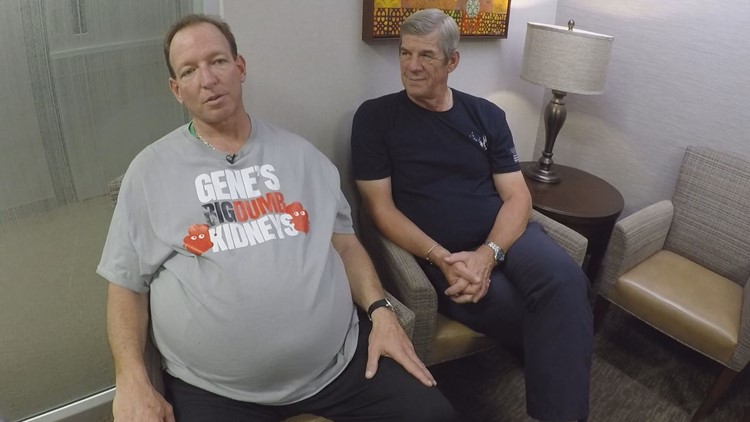
Doctors believe Okun, a former powerlifter and bodybuilder, has the largest kidneys in the world. An average kidney is the size of your fist. Okun’s are bigger than a football.

“I can’t say growing bigger kidneys was on my list of dream accomplishments. Unfortunately, as luck would have it, I am now famous for big kidneys and not bodybuilding,” he said.

Gene, who lives in Southern California, has genetic kidney disease. It’s called polycystic kidney disease, or PKD. The 50-pound dumbbells he used for training are the same weight as his kidneys.

PKD is a genetic disease passed from an affected parent to their child causing uncontrolled growth of cysts in the kidney. Most people with PKD experience kidney failure by age 60, according to the PKD Foundation.

The same disease Okun lives with ended the life of his father, also named Gene. For years, Okun, 52, tried to rewrite his story.

He launched an online campaign called Gene's Big Dumb Kidneys. Okun said he wanted to use comedy to raise awareness and search for a living kidney donor.

He calls the left one "Big". The right one is "Dumb". That’s how Okun describes his kidneys. Because of the disease, Gene never married or had children.

“That is a real traumatic thing as a child growing knowing you will need dialysis or transplant,” he said.

But Gene has a chance his father didn't. All thanks to his best friend, Bill McNeese. Most friends loan money and donate their time --- but an organ? In June, surgeons with the Mayo Clinic performed the lifesaving kidney transplant Gene needed.

Okun said he is “grateful for the blessing” of his living kidney donor.

“It became clear to me it was part of God's plan to do this, “McNeese said. “I am just a good friend. Somebody that does things without being asked because you care about somebody,” McNeese said. “It became clear to me it was part of God's plan to do this.”

Mayo Clinic's Dr. Mikel Prieto led the surgery. Initially, he thought it would take two hours, an hour for each kidney, but it took 12.

“His kidneys were enormous. Probably the biggest ones I have ever seen,” he said, “He is actually a thin guy. These enormous things inside his abdomen.”

Okun said he chose the Mayo Clinic because of a minimally invasive technique doctors used to laparoscopically remove the diseased kidneys. Because of it, Mayo surgeons can complete two procedures, with one surgery. According to its website, the Mayo Clinic pioneered the process of performing both kidney laparoscopic removal and transplant surgeries for polycystic kidney disease patients simultaneously. This procedure eliminates the need for two surgeries where the old kidneys would be removed first.

Living donation saves two lives: The recipient and the next one on the deceased organ waiting list. Kidney and liver patients who are able to receive a living donor transplant can receive the best quality organ much sooner, often in less than a year.

Following the surgery, Okun was able to see his feet. A sight he hadn’t seen in years.

“My stomach was flat. I could see my feet. Blown away I wasn't so round, anymore,” he said.

Gene and Bill, friends for 20 years, are now family for life.

“I am grateful for you saving my life. I truly wouldn't be in this spot if it wasn't for you stepping up and wanting to give me life,” Gene told Bill days after the surgery.

McNeese said he always wanted a brother. Now, he has one in Okun. Brother is a title Okun accepts with pride.


From Quartz, by Chris Baraniuk

Why Spain has more organ donors than any other country in the world


Five years ago, Sergio Cobos was just trying to stay alive. He had battled with kidney disease for years, and things were getting worse. His legs would fill with fluid and he was plagued by cramps. A previously athletic man of 36, he should have been in sound physical shape. But now he struggled to get up the stairs.

Then everything changed—he had a kidney transplant. Today, as he strolls out of a botanical glasshouse in a park by La Chopera, on the Manzanares river in Madrid, he seems healthy and relaxed, dressed in a bright tracksuit and trainers.

When Cobos’s doctor told him that his kidney disease had reached the point at which a transplant or ongoing dialysis was necessary, he asked his friends and family if any of them would offer him a kidney as a living donor. In all, 16 people said yes.

“My mum was meant to be donating for me and she was the most compatible one,” he says through a translator, “but suddenly within [the donor] list there was someone who was even more compatible.” He had been on the waiting list for just 20 days.

All he knows about the person who saved his life is that she was a woman from Madrid who was 10 years older than him and who died from a stroke. That a highly compatible deceased donor was available as well as so many willing living donors, including family members, is perhaps a reflection of something that makes Spain a very special country indeed: it leads the world in organ donation. And by quite a margin.

Figures published for 2017 reveal that 2,183 people in Spain became organ donors last year after they died. That’s 46.9 per million people in the population (pmp)—a standard way of measuring the rate of donation in a country.

Spain’s closest contender is Croatia, with 38.6 pmp (2016). It has maintained its position as the clear leader for the past 26 years. In a press release, Spain’s National Transplant Organization confidently describes the country as “imbatible”—unbeatable.

When attempting to explain Spain’s success, it’s the ‘opt-out’ (or presumed consent) system for deceased organ donation that is perhaps cited more often than anything else. Opt-out means that a patient is presumed to consent to organ donation even if they have never registered as a donor.

Countries that don’t have such a system often focus on changing the law as a key way to increase donations. Lawmakers in England are currently deciding whether the country should change from opt-in to opt-out like Spain. This is an attempt to redress a major difference between the UK and Spain: the rate of refusal of potential donors or their families in consenting to donation. The rate of family refusal is still significantly higher in England than Spain, at 37% versus 13%.

The tantalizing prize awaiting any country that does manage to increase donation rates is clear: better lives for potentially thousands of people. The impact Spain’s 2,183 deceased donors had last year, for example, is staggering. They made 5,260 transplant surgeries possible, including more than 3,200 kidney transplants and 1,200 liver transplants. There were 360 lung and 300 heart transplants. But would changing the law in countries that don’t have opt-out systems have the desired effect?
Working with families

In La Paz University Hospital, north of Madrid’s city center, Abderrazzak Lamjafar is sitting in a playroom. His 12-year-old daughter is nearby on the ward, having recently received a liver transplant. It’s nap time, so the playroom is deserted.

Lamjafar rests his hands on the little table in front of him. His daughter, he says, had originally been diagnosed in Morocco. “They said there was something wrong with her liver and that they are not experts and are not able to treat her there,” he says through a translator.

“They told me to take her home, get her to rest and eat well.” Some samples for medical tests were taken, but Lamjafar didn’t want to wait and see what might happen. Since his daughter had been born in Spain, she was entitled to treatment there. In Spain, doctors confirmed that she was suffering from acute hepatic failure—a type of liver dysfunction that can quickly put the patient into a coma if left untreated. When the disease occurs in children, transplantation is often essential.

After being referred from one hospital to another, they were eventually driven by ambulance from Murcia to La Paz in Madrid, arriving at 3am on Jan. 25, 2018. Five days later, the girl’s liver was removed and replaced with one from a deceased donor.

“She was literally almost dead before surgery,” remembers Lamjafar. But the next day, she woke up feeling immediately better, he says.

More than once, Lamjafar expresses his gratitude to Spain itself for making all of this possible. It’s clear that the worry, the days and nights of uncertainty, remain raw. He adds, in fact, that the set of tests booked by doctors in Morocco have still not been completed.

“When the doctor back home found out [that the transplant had already happened] he could hardly believe it,” Lamjafar says.

In order for transplant surgeries like this to happen, people must retrieve donor organs from deceased people. It falls to coordinator teams in hospitals across Spain to know which patients want to donate their organs in the event that they die. At La Paz, that job belongs to Belén Estébanez.

Originally from Malaga, Estébanez has been working as a transplant coordinator here for nearly four years. It’s not an easy or predictable job, she says, but it is one she describes as “a gift”.

Despite Spain having a nominal presumed consent system, in practice coordinators do all they can to find out whether a patient is happy to donate before they die, and also whether their relatives or loved ones are comfortable with this.

Around 10–15% of relatives will refuse consent, says Estébanez—a number that she would like to see fall to zero. Still, the shock of death is sometimes hard to reckon with. Estébanez remembers one patient who said he wanted to be a donor. After he died, his sister approved but his wife did not. The medical team always respects what the family wants, she says.

These conversations are never easy. Estébanez recalls one case, of a 14-month-old baby boy. He was playing in the park and started to feel unwell, so his mother brought him to a local health center. His condition worsened and he was taken to hospital. Once there, doctors confirmed he had meningitis, says Estébanez. He died shortly after.

She and her team had to ask the family if they would consent to organ donation—and also for the child to be kept on life support for 48 hours, to allow for antibiotic treatment to prevent the infection being passed on to transplant patients. As she talks, Estébanez breaks down. She wipes a tear from her cheek.

“I remember that conversation, with his mother holding her baby’s teddy bear,” she says.

On the photo ID card hanging on a lanyard around her neck, she has placed two sticky silver stars—one on the front, one on the back. Although she remembers all of the patients and families she’s worked with, these stars remind her of two particular patients who became donors after death.

One was a boy who suffered a brain injury in a bad motorbike accident. She remembers the family consenting to life support being turned off. The second star is for a colleague, a neurologist who collapsed just after meeting his son at the airport. “He suffered from a very severe brain injury and wanted to donate,” she says.

Transplant coordinators aren’t involved in the decisions about where organs will end up. That happens very nearby, however, within the walls of the National Transplant Organization (Organización Nacional de Trasplantes, or ONT). It’s here that staff communicate with the 189 hospitals in Spain that can perform organ extractions, to find out where in the country organs are available and where they are most needed. Of those 189 hospitals, 44 are able to carry out transplant surgeries.

Estébanez, like all transplant coordinators in Spain, uses a database to share information with the ONT. However, they still often rely on phone conversations too. She shows me her work phone—an old, beaten-up black plastic mobile with large buttons. It looks about 20 years old. But it does the job.

Sunday, June 24, 2018

Living Beyond PKD, Need Kidney Donors, Medicaid Expansion Increased Kidney Transpalnts

Living Beyond PKD

From Newcastle Herald, Australia, by Helen Gregory

Hunter athlete fighting polycystic kidney disease tackles 24 hour obstacle course

Eyes on prize: Jillian Bellamy, pictured training at Merewether, enjoys the social aspect of endurance races. “It’s a safe zone, everyone wants to help each other and supports each other to get through it". Picture: Jonathan Carroll


JILLIAN Bellamy had just completed her second obstacle course when she realised some other competitors were pushing beyond her one lap.

“I thought ‘I want to do that!’,” she said. “I want to still be on an obstacle course at midnight wearing nothing but a headlamp!”

Ms Bellamy, 28, got her wish and competed in her first 24 hour endurance event in 2016.

The Rutherford primary school teacher will compete against 400 participants on Saturday – when showers are forecast – in the globe’s first 24 Hour Enduro OCR World Championships, to be held at Dargle Farm outside of Sydney.

The event includes completing as many laps of an 11 kilometre course as possible in 24 hours.

The course has 30 obstacles, ranging from crawling, to climbing ropes and carrying weights.

“I really like all the rope climbing – I have a lot of lower body strength rather than upper body strength,” she said.

“But I also like all the full body work - running, jumping and pushing myself over the top of a wall or getting down and crawling between tyres and barbed wire.”

Ms Bellamy said her determination to push her body to its limits came from her desire to focus on what it is capable of, instead of her polycystic kidney disease.

She was 15 when she received a “bombshell” diagnosis of the inherited disorder, where clusters of cysts develop within the kidneys, causing them to enlarge and lose function over time.

She was told she would need blood pressure medication, regular blood tests, to see a specialist and consult a nutritionist to cut almost all processed food from her diet.

For now, she said, the only symptom she has is pain when one of the cysts bursts.

“Health and fitness is a big distraction from the disease,” she said.

“It keeps me in control of what my body can do. I love these challenges so much because one day I won’t be able to do them. I want to do them now – and I will do them now.”

Ms Bellamy is aiming to complete seven or eight laps in the event.

She’s been training at least two hours a day every day since January, when she received medical clearance for a hip injury.

“You don’t know what to prepare for until you’re out there,” she said.

“You can do as much training as you like but you don’t know what’s going to hit until you’re on the course.

“The first year it was minus five degrees.

“I only had one outfit and I thought my fingers were going to fall off.

The second year it was raining and I thought ‘Why am I doing this?’

“You start counting down the minutes till the sun comes up and thinking about when you can have a hot shower and food.

“But when you finish it’s the best feeling.

“You’re walking like a penguin and all you can do is laugh.

“You think ‘I love this pain – I’m coming back again’.”


Kidney Donors & Transplants

From The Boston Herald, by Sean Philip Cotter

John Nucci's kidney transplant shines light on need for donors

GIFT OF LIFE: Kerri Abrams will donate a kidney to John Nucci today at Massachusetts General Hospital. Staff photo by Nicolaus Czarnecki


As John Nucci undergoes kidney transplant surgery today, advocates and doctors say there is a vital need for more donors — a cause the former city councilor says he will champion when he recovers.

Nucci, 66, of East Boston, was due to go under the knife early this morning at Massachusetts General Hospital alongside family friend Kerri Abrams, 37, of Arlington, who is donating one of her kidneys to him.

Nucci’s own kidneys are operating at just 2 percent due to his genetic polycystic kidney disease. He said yesterday he was confident as he prepared to go into surgery at Massachusetts General.

“They know what they’re doing,” Nucci said.

Dr. Elliot Heher, the medical director of MGH’s kidney donor team, said the number of people waiting for a kidney skyrocketed between 1998 and 2015 as advances in transplant medicine made getting a new kidney the ideal option rather than one of last resort.

“Now there’s absolutely no doubt that transplantation is preferred” to alternatives such as dialysis, Heher said. “It’s what we all would want for ourselves.”

The supply of kidneys, though, has not followed, Heher said. He said it’s remained relatively level for a couple of decades, so a gap has yawned between the supply and need for kidneys even though the spike in people looking for kidneys has plateaued since 2015. Some of the 83,978 on the list nationally may have to wait a decade for the organ.

Today’s surgery — removing a kidney from Abrams and transplanting it into Nucci, is expected to take three to four hours.

Typically, the operation involves doctors making a long incision on the side of each patient, according to the Johns Hopkins University.

The doctors usually have the kidney switch sides; if it comes from her right side, it will end up in his left, and vice versa. They do that because a flipped kidney allows the doctors better access to connecting all the internal tubes, according to Johns Hopkins.

Nucci said he’s hoping to be discharged as early as Friday.

Nucci said he plans on advocating for a law revision to change how people register as organ donors. He wants to make it so you have to opt out of being an organ donor rather than choosing to be one.

Nucci said he believes many people who aren’t registered as being possible organ donors in the event of their deaths would be just fine with someone making good use of their body parts after they’re gone.

“I was one of them,” Nucci said. He just recently had the Registry of Motor Vehicles put the little red heart on his driver’s license.

Paul Dooley, the head of a Canton-based organization called MatchingDonors.com that pairs up living donors and recipients, said as many as two dozen a day contact the nonprofit looking to donate a kidney out of the kindness of their hearts.

“It’s amazing — good people come forward,” Dooley said, adding that their motivations are often personal. “Someone lost a grandparent, they want to save a grandparent. Someone lost a nephew, they want to save a kid.”


Post Operation UPDATE

John Nucci says he already can feel his new kidney working.

“This great feeling just came over me after the surgery,” the former Boston city councilor said when reached by phone yesterday evening, as he recovered from Tuesday’s transplant surgery at Massachusetts General Hospital.

Nucci, 66, of East Boston, received a kidney from family friend Kerri Abrams, who volunteered to donate one of hers when she learned from a Herald article that Nucci was suffering from a rare genetic disorder and in dire need of one.

Surgeons at Massachusetts General Hospital carried out the procedure Tuesday over the course of a few hours, removing one of her kidneys and implanting it into Nucci.

Kidneys filter toxins out of the blood and produce urine. Nucci said the slow decline caused by his genetic polycystic kidney disease had left him chronically exhausted. Though he’s in some pain after the major surgery, Nucci said the strong new organ has swept all that away.

“It was like a fog had lifted,” Nucci said. “I forgot what it was like.”

Nucci said he’s hoping to be discharged sometime around this weekend.

Doctors 30 years ago diagnosed Nucci with the disease, which causes non-cancerous cysts to grow on a person’s kidneys until the organs ultimately fail. Nucci’s kidneys before the surgery were operating at 2 percent. Nucci inherited the condition from his father, who died from the illness at 64, and his three sons have all tested positive for the disease.


From Drexel University - Now, by By: Lauren Ingeno

Medicaid Expansion Under the ACA Increased Low-Income Patient Access to Kidney Transplants


After states expanded Medicaid to cover more low-income individuals under the Affordable Care Act (ACA), there was a significant boost in the number of chronic kidney disease patients with Medicaid coverage who were placed on the kidney transplant waiting list, according to a new study led by Drexel University researchers.

Medicaid expansion was associated with larger increases in Medicaid coverage among new listings of racial and ethnic minority patients compared to listings of white patients. This suggests that Medicaid expansion may have helped to curb racial and socioeconomic disparities in pre-dialysis chronic kidney disease care in the United States. The findings appear in an upcoming issue of the Clinical Journal of the American Society of Nephrology (CJASN).

More than 93,000 people are currently listed for a new kidney, according to the U.S. Department of Health and Human Services. While black and Hispanic Americans have higher rates of diabetes and high blood pressure than white Americans, putting them at risk for organ failure, historically patients who were white or had private health insurance were more likely to receive an organ transplant.

Kidney transplantation is more cost-effective and associated with better health outcomes than dialysis. Getting on the waiting list early can shorten the amount of time that kidney transplant candidates need to endure dialysis before getting a transplant, with average waiting times of five to seven years. However, access to the list is largely dependent on having health insurance coverage, and Medicare only provides a health insurance “safety net” for individuals without other insurance coverage after they start dialysis.

“The sooner you can get on the list, the sooner you may receive a transplant. However, before the ACA, the majority of patients who got on the waiting list before starting dialysis had private health insurance and were white, even though minorities are substantially more likely than white individuals to end up with late-stage kidney disease,” said the study’s lead author Meera Nair Harhay, MD, an assistant professor of medicine at Drexel University College of Medicine. “Given evidence that millions of low income and minority individuals gained insurance coverage by Medicaid expansion, I wondered whether Medicaid expansion was also changing the socioeconomic and racial makeup of the kidney transplant waitlist.”

January 1, 2014 marked the beginning of the full implementation of Medicaid expansion in the United States, when the federal government enhanced funding to states that elected to expand Medicaid to cover low-income adults at or below 138 percent of the federal poverty level. Using national data from the United Network of Organ Sharing database over a six-year period, Harhay and her colleagues compared trends in insurance types used for preemptive listings among U.S. states that did and did not expand Medicaid under the ACA. They also examined whether there was evidence of differences in insurance types used for preemptive listings of minorities compared to listings of white transplant candidates after Medicaid expansion

The researchers found that states that expanded their Medicaid programs experienced an increase in preemptive listings of Medicaid beneficiaries. States that fully implemented Medicaid expansion on January 1, 2014 had a 59 percent relative increase in Medicaid-covered preemptive listings (1,094 to 1,737 patients) from the pre-expansion (years 2011-2013) to post-expansion period (years 2014-2016), compared with an 8.8 percent relative increase among Medicaid non-expansion states. From the pre- to post-expansion period, the adjusted proportion of listings with Medicaid coverage increased by 3 percentage-points among expansion states and decreased by 0.3 percentage-points among non-expansion states.

“In states that did not expand Medicaid, millions of individuals with incomes too high to qualify for Medicaid and too low to receive subsidized private insurance remain uninsured,” the study authors write in their conclusion. “Given this coverage gap, it is uncertain if low-income individuals with chronic kidney disease in non-expansion states have had equivalent opportunities to accrue preemptive waiting time for kidney transplantation.”

The authors also found that in expansion states, the proportion of new black listings with Medicaid coverage increased by 4 percentage points, and the proportion of new Hispanic listings with Medicaid coverage increased by 5.9 percentage points, whereas the proportion of new white listings with Medicaid coverage increased by only 1.4 percentage points.

With respect to cost, the study authors note that U.S. spending for chronic dialysis currently exceeds 30 billion dollars per year.

“Policies, such as insurance expansion, that expand access to health care and kidney transplantation services for low-income patients could lessen the number of patients on dialysis and significantly reduce these costs,” said study co-author Ryan McKenna, PhD,an assistant professor at Drexel’s Dornsife School of Public Health. “Our study has shown that expanding Medicaid may provide a pathway to kidney transplantation for low income individuals with kidney disease,” Harhay said.

The study authors concluded that more research is needed to find out whether long-term transplant outcomes differ among candidates who were listed with expanded Medicaid coverage compared with those with other coverage options.

Sunday, June 3, 2018

Tolvaptan is Helping, PKD Research: Bardoxolone Methyl Clinical Study, Organs on Chips, ADPKD RouteMap for Patients

PKD Treatment

From WCVB, ABC Affiliate, Boston

'Revolutionary' drug offers first treatment for devastating kidney disease

Clinical trials in Boston show tolvaptan slows progression of hereditary PKD

For Claudia Iliescu, the trunk of her family tree might as well have the letters PKD carved into the base.

The acronym is shorthand for polycystic kidney disease.


"My grandmother had it," Iliescu said. "And many uncles and aunts and cousins of my mom had it."

She said about half of the relatives on her maternal side have been diagnosed.

"They had persistent, consistent pain," Iliescu said. "And complications."

Iliescu's family has an hereditary form of the disease called autosomal dominant PKD. It's progressive, causing fluid-filled cysts to develop and multiply in both kidneys.

"And as the cysts grow, you feel fullness in your abdomen," she said. "You cannot eat anymore very well because everything's compressed."

The disease has no cure. Instead, as the kidneys fail, patients undergo dialysis or a kidney transplant.

This poor prognosis has devastated Iliescu's family for generations. She remembers thinking that it's her turn now.

"It's always in the back of your head," she said. "You always think, 'OK, so this is what's coming and there's nothing I can do about it.'"

That changed when Dr. Ronald Perrone at Tufts Medical Center suggested she participate in clinical trials for the drug tolvaptan.

The treatment helped Iliescu. Now, the Food and Drug Administration agrees, it can help other patients, too.

"This is the first disease-modifying drug for polycystic kidney disease," Perrone said. "So it's really revolutionary."

Tolvaptan is now available under the brand name Jynarque.

The drug won't reverse the symptoms of PKD, but the trials showed it delays them. It also decreases the rate of kidney pain, stones and infections.

"For patients, it gives them some hope rather than the bleak future that many of them might have envisioned for themselves," Perrone said.

Even with the trial over, Iliescu continues to take tolvaptan. She still has cysts, but they don't appear to be growing.

"Even if I need a transplant or dialysis in my late 60s or 70s, that's a much better outcome than needing it earlier," Iliescu said. "Just slowing down the progression of the disease is fantastic."


PKD Research

From The Conversation


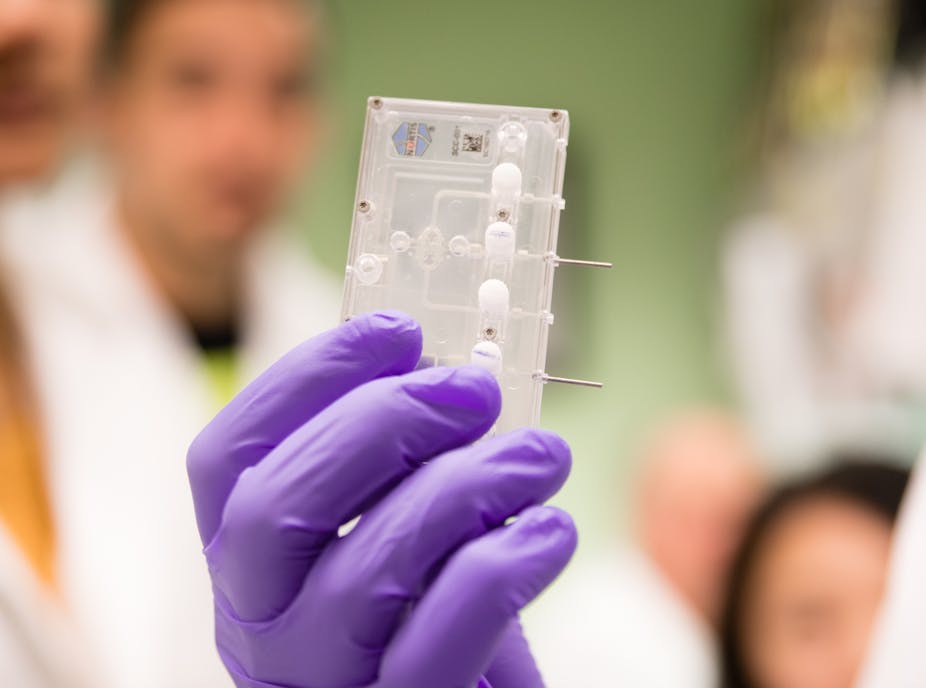
It doesn’t look like a kidney, but this ‘kidney-on-a-chip’ is a breakthrough for new drug testing. Alex Levine, CC BY-ND

Getting a new pharmaceutical from an idea in the chemistry lab to market takes many years and billions of dollars. Each year just several dozen new drugs are approved for use in the United States.

Human “organs-on-chips” are leading a revolution in drug safety testing. These devices use human cells to model the structure and function of human organs and tissues. By testing the potential effects of drugs on different organs faster than traditional methods, organs-on-chips can reduce the need for animal studies and better predict which new drugs will effectively treat human disease.

As part of an interdisciplinary research team, we’re working on a kidney-on-a-chip to improve our understanding of how kidney diseases begin and which drugs can safely treat them.

Quicker and better testing

Historically, laboratory testing for new drugs is performed in cells grown in dishes or flasks. If a drug passes initial screening tests in vitro, researchers next test it in vivo in live animals to determine the effects of a new drug on a whole system instead of just one cell type at a time. Finally, after many years of laboratory investigation, researchers will test a promising new drug in people to see if it is safe and effective.

The problem is 9 out of 10 of these drugs never make it from small-scale human tests to the patient because they turn out to be ineffective or toxic, even if they showed promising results in early testing.

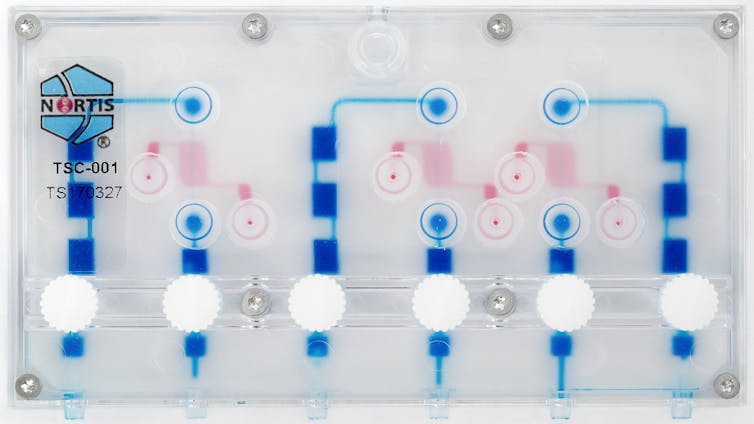
Organs-on-chips have the potential to completely transform that system. Ranging from the size of a fingernail to that of a credit card, they’re composed of fluid channels and tiny chambers that contain human cell samples. Organs-on-chips in development in labs around the country include kidney, lung, liver, intestine, skin, brain, heart, bone and reproductive systems.

In an organ-on-a-chip, flowing liquid supplies the cells with oxygen and nutrients, similar to the way blood sustains cells in the human body. It’s this constant flow that makes these devices special. Cells grown in organs-on-chips devices act more like cells in a human organ than do cells grown in flat dishes without flow.
Fluid circulates through a kidney-on-a-chip. Alex Levine, CC BY-ND


Case of the kidney-on-a-chip

Kidneys are incredibly important to overall human health. The two fist-sized kidneys remove drugs and unwanted compounds from the body and play a critical role in maintaining proper salt and water balance, blood pressure and vitamin D and bone health. Genetic conditions and even commonly administered medications can, in some circumstances, damage the kidneys.

In the U.S., 15 percent of adults have kidney diseases. But most don’t even know it, because kidney diseases often display no symptoms until the condition is very advanced. There’s a pressing need to understand how kidney disease begins, and to develop new safe and effective treatments.

Here at the University of Washington, our kidney-on-a-chip research team is composed of scientists from many different disciplines, including pharmacy, pharmaceutical sciences, nephrology (kidney medicine), toxicology, biochemistry and bioengineering.

In partnership with Nortis, Inc., a local biotechnology company, our team has created a small device — the size of a business card — with up to three tiny tubes, each one-thousandth the size of a drop of water, containing 5,000 human kidney cells. When tiny amounts of fluid are pumped through the tubes, the kidney cells are exposed to important signals that help the cells in the chip behave as if they were in a live kidney.

We’ve found that the kidney cells release signals – called biomarkers – of injury when exposed to known kidney toxins. Our research showed that cells on the chip released markers of injury commonly seen in the urine of people with kidney damage. Testing with the older method, using cells on plates, did not show any damage with the same treatment. This suggests that the kidney-on-a-chip may be better than existing methods at predicting if a new drug will cause kidney damage in humans.

Connecting organs-on-chips to mimic systems

Now that we’ve had these promising results, scientific teams across the country are starting to connect different organs together to replicate a more complex, multi-organ system, to give greater insights into how drugs affect people. For example, we were able to connect a liver-on-a-chip to a kidney-on-a-chip to learn how a plant extract used in some herbal medicines, called aristolochic acid, damages kidney cells. This chip-to-chip investigation reinforces the need for interconnected organs-on-a-chip to replicate the complex mechanics in the human body.

In the coming year, our kidney-on-a-chip project will be one of several sent to the International Space Station where low gravity speeds up changes in cells, sometimes causing health problems for astronauts. The Space Station could be the perfect place to find out more about kidney diseases in weeks, rather than years or decades.

Organs-on-chips can also be used to discover new drug targets. Our team is evaluating the kidney-on-a-chip as a tool to personalize drug selection and dosing in people with kidney cancer, polycystic kidney disease and chronic kidney disease. Other organs-on-chips labs around the country are studying diseases of the immune system, brain, lungs, heart and blood vessels. By working together, dozens of research teams are developing this new technology to revolutionize drug discovery, leading to the development of better and safer medications for all.


From Nasdaq.com, Press release

Bardoxolone Methyl Improved Kidney Function in Patients With Autosomal Dominant Polycystic Kidney Disease and IgA Nephropathy in the Ongoing Phase 2 Phoenix Study


Reata Pharmaceuticals, Inc. (NASDAQ:RETA), a clinical-stage biopharmaceutical company, today announced that positive interim data from the autosomal dominant polycystic kidney disease (ADPKD) and IgA nephropathy cohorts of the ongoing, open-label, Phase 2 PHOENIX trial are being presented by Pablo E. Pergola, M.D., Ph.D., Research Director, Renal Associates, PA, San Antonio, at the European Renal Association and European Dialysis and Transplant Association (ERA-EDTA) meeting in Copenhagen.

The ADPKD cohort of PHOENIX enrolled 31 patients, and available data demonstrate that bardoxolone methyl (bardoxolone) significantly improved kidney function in ADPKD patients as measured by their estimated glomerular filtration rate (eGFR). Bardoxolone-treated patients showed a mean improvement of 6.6 mL/min/1.73 m2 at Week 4 (n=31; p<0.0001), increasing to 12.0 mL/min/1.73 m2 at Week 12 (n=8; p<0.0001) from a mean baseline eGFR of 47.7 mL/min/1.73 m2. The IgA nephropathy cohort enrolled 26 patients, and data were reported through Week 8. Bardoxolone-treated patients showed a mean improvement of 8.4 mL/min/1.73 m2 at Week 8 (n=9; p<0.0001) from a mean baseline eGFR of 46.2 mL/min/1.73 m2. No drug-related serious adverse events have been reported, and reported adverse events have generally been mild to moderate in intensity. Full data for the primary endpoint of change in eGFR at Week 12 for the ADPKD, IgA nephropathy, and type 1 diabetic chronic kidney disease (CKD) cohorts of PHOENIX will be available in the third quarter of 2018.

"Bardoxolone has now produced large improvements in kidney function in a high percentage of patients spanning 11 trials and five different forms of chronic kidney disease," said Dr. Pergola. "These observations suggest that bardoxolone is addressing pathogenic pathways of inflammation and fibrosis that contribute to the loss of kidney function in patients with chronic kidney disease."

Additionally, Dr. Christoph Wanner, M.D., Chief of the Division of Nephrology and Hypertension at the University Hospital of Würzburg, Germany, gave an oral presentation at ERA-EDTA entitled "Bardoxolone Methyl Prevents eGFR Decline in Patients with Chronic Kidney Disease Stage 4 and Type 2 Diabetes ─ Post-hoc Analyses from BEACON." The analysis demonstrated that patients randomized to bardoxolone were more than 50 percent less likely than patients receiving placebo to experience events that predict kidney failure. The authors of the abstract concluded that bardoxolone preserves kidney function and may delay the onset of kidney failure in patients with type 2 diabetes and stage 4 CKD. The abstract was named a Ten Best Abstract by the Paper Selection Committee of ERA-EDTA.

"Bardoxolone's improvements in kidney function in patients with ADPKD and IgA nephropathy are consistent with improvements observed in other forms of CKD, which have been durable and predictive of retained eGFR benefit after withdrawal of drug in prior trials," said Colin Meyer, M.D., Reata's Chief Medical Officer. "Additionally, selection of the BEACON outcomes analysis for oral presentation at one the world's top nephrology meetings, six years after BEACON concluded, reinforces the importance of the study's results. The durable increases in eGFR associated with a 50 percent reduction in outcomes inspire optimism for bardoxolone's potential to delay or prevent dialysis in CKD."


Living with PKD

From Great Reporter

Launch of the ADPKD Patient Routemap: an interactive new resource to help empower patients and families


ERA-EDTA Congress 2018 sees the launch of the ADPKD Patient Route Map, an interactive resource designed to help educate and empower people affected by autosomal dominant polycystic kidney disease (ADPKD).

‘The ADPKD Patient Route Map is a great example of how patients and experts can work together’, says Tess Harris, PKD International President and an ADPKD patient. ‘Ultimately the idea is to help everyone affected by ADPKD cope better with the disease and get all the care, support and information they need, at the right time’.

The ADPKD Patient Route Map is freely available to download from the PKD International website (www.pkdinternational.org/adpkd-route-map).

The Route Map explains the types of care and support that patients and families should expect from their health service. The aim is to help patients and carers to manage their own health with their healthcare team, to talk about ADPKD with their nephrologist, to participate in making decisions about their own care, and to make the best use of available care and support services.

The Route Map was developed jointly by the European ADPKD Forum (EAF). EAF is an international group of experts from the fields of nephrology, genetics, hepatology and advocacy, and PKD International, the international ADPKD patient support group alliance.

The idea for the Route Map came from an EAF Round Table meeting involving patients and representatives from various European-level societies of medical specialists involved in ADPKD care and kidney patient organisations, in January 2016. The resulting ‘EAF Multidisciplinary Position Statement on ADPKD Care ’, recently published in the April edition of Nephrology Dialysis and Transplantation, explains the principles and evidence base for the Route Map.

The Route Map presents in lay terms what ADPKD is, how it is diagnosed, assessed and managed over the course of the disease – including self-care measures that patients can take to stay as healthy as possible. It also covers kidney complications (such as cyst infections and kidney stones), pain management and major non-kidney manifestations (such as liver cysts). It gives advice on issues such as genetics and genetic testing, family planning, and coping with the effects of ADPKD on wellbeing, work and finances. Finally, it outlines opportunities for patients to participate in research, registries and highlights the role of the European Rare Kidney Disease Network (ERKNet).

As Prof. Albert Ong (Sheffield, UK), a co-author of the Route Map put it: ‘We’ve tried to map out ADPKD along the course of a lifetime. What’s great about the Route Map is that it’s not just a book of facts – it’s attractive and interactive, allowing people to look at different topics according to the different stages of their own journey.’

The Route Map allows readers to reveal further information on key topics and messages of advice, experience and support provided by patients and their family members across Europe. Checklists are provided to help patients and families get the most out of consultations, and healthcare teams ensure that patients are always at the centre of their care pathway.

Co-author Dr Vicente Torres (Rochester, MN, USA) said: ‘The Route Map should be very useful to nephrologists – to help us to inform and empower our patients and to ensure that our services are truly patient-centred.’