Sunday, March 25, 2018

PKD Foundation Update

PKD Foundation

From PKD Foundation

Washington Summary March 2018


Advocacy Alert

Last week, the PKD Foundation asked its advocates to urge Congress to keep PKD on the list of eligible research programs for Fiscal Year 2018 under the Department of Defense’s Congressionally Directed Medical Research Program (CDMRP). Thank you to everyone who took action! We are continuing to push and monitor this situation and are also actively working to ensure inclusion for Fiscal Year 2019.

Health Research and Other Spending Programs

Congress continues to work on a spending proposal that will keep government departments and agencies (such as NIH) open for the rest of FY18. The latest short-term funding law expires on March 23.

At this writing, neither the House nor Senate Appropriations Committee has released details on how much NIH and other health research programs will receive for this fiscal year, which ends on September 30. That funding level will be the baseline for determining future health research funding.

At the same time, the House Appropriations Committee is beginning to work on the FY19 budget. On March 15, HHS Secretary Alex Azar appeared before the Labor/HHS Subcommittee to explain the administration’s proposal.

Affordable Care Act (ACA) Cost Sharing

Congress continues to discuss ways to stabilize the ACA individual insurance market by providing cost-sharing reduction (CSR) funds. The latest proposal from Sens. Lamar Alexander (R-TN) and Patty Murray (D-WA) would fund the cost-sharing program, give states more waiver flexibility, and fund reinsurance programs. Sens. Susan Collins (R-ME) and Bill Nelson (D-FL) have their own proposals to stabilize the individual insurance market through direct funding and a reinsurance program similar to previous state-based risk pools. Whether any of the efforts succeed will depend on convincing the House of Representatives.

Insurance Coverage for Essential Health Benefits and Pre-Existing Conditions

The administration has announced additional proposals that would revise or replace major ACA provisions. In addition, some states are taking their own actions.

On Feb. 20, the administration announced that it would allow the sale of short-term (less than a full year) health insurance policies. These plans would not have to cover people with certain medical conditions. The plans also could charge higher premiums for people with health issues. Once the 60-day comment period ends, HHS will review the comments and issue a final regulation.

In late January, Idaho announced that it would permit the sale of non-ACA compliant policies to its residents. Under these policies, insurers could charge higher premiums for people with preexisting conditions. On March 8, CMS advised Idaho officials that the state’s plan fails to enforce essential ACA provisions. Idaho officials believe that their proposal can be modified to comply with ACA, and they may submit a modified proposal.

Elsewhere, the Iowa senate has passed a bill that would allow the Iowa Farm Bureau and Wellmark to sell non-ACA-compliant policies.

If you receive your health insurance through a non-ACA plan, you still should monitor activities in your home state.

Bills of Importance to the PKD Community

Living Donor Protection Act (HR 1270/no Senate bill yet) would remove barriers to living organ donation. Rep. Jerrold Nadler (D-NY) and Rep. Jaime Herrera Beutler (R-WA) introduced the bill. PKD and several other patient groups have signed a letter urging House Members to cosponsor HR 1270.
The OPEN Act (HR 1223/ S 1509) would make it easier for companies to repurpose approved drugs for treating rare diseases. Reps. Gus Bilirakis (R-FL), GK Butterfield (D-NC), and Mike McCaul (R-TX) introduced HR 1223. Sens. Orrin Hatch (R-UT) and Robert Menendez (D-NJ) introduced S 1509.

Say Thanks to Supporters

The following Senators and Members of Congress have cosponsored either the OPEN Act or the Living Donor Protection Act since the previous newsletter. If any of them represent you, please say “thank you” the next time that you contact them.

HR 1223, the OPEN Act
Rep. Christopher Smith (R-NJ)
Rep. Alcee Hastings (D-FL)
Rep. Barbara Comstock (R-VA)
Rep. Brian Fitzpatrick (R-PA)
Rep. Michelle Lujan Grisham D-NM

Stay Alert

When the time comes, we will ask PKD advocates to immediately contact their elected officials to protect your interests. Your voice needs to be heard.

Sunday, March 18, 2018

PKD Fundraising Atlanta: Day of the Juice, Bionic Kidney Trials in 2018, Growing Veins for Dialysis

PKD Fundraising

From Paste Magazine, By Jim Vorel
Talking All Things Hoppy With the Organizers of Atlanta’s New “Day of the Juice” Festival

Talking All Things Hoppy With the Organizers of Atlanta’s New “Day of the Juice” Festival


Paste: Who are your charities?

Lowenberg: There’s two charities, the Polycystic Kidney Disease Foundation and the Georgia Transplant Foundation. Eric Levin, one of our founders, has had a kidney transplant, so those charities are pretty close to home for Modern Hops as a whole.


Finding a niche for a first-time beer festival is no easy feat. Organizers need to hit upon a concept that captures some element of the current zeitgeist, while also dealing with a lack of brand recognition for a festival whose name or production company are unfamiliar to attendees. For the same reasons, it’s difficult to get the most hyped and desirable breweries to attend a new festival, just as it’s hard to book popular bands at a first-year music fest. On some level, if you’re trying to start a new festival from scratch (especially in a city with no shortage of fests), the deck is stacked against you.

Enter, Modern Hops and Atlanta’s upcoming (March 31) Day of the Juice charity festival. Rather than simply replicating the format of one of Atlanta’s more established beer festivals (which are numerous), this indie craft beer distributor is doubling down on a more esoteric concept—a showcase of juicy (and mostly hop-forward) beers from a collection of well-curated, buzzworthy, but relatively smaller stature breweries. Yes, it’s a festival of hoppy, hazy and juicy … but without a Tree House or Trillium in sight. Rather, the focus is on younger breweries striving to be the nextTree House or Trillium.

Considering this fest is happening in Paste’s backyard, I was able to sit down for a short chat with one of the organizers, Michael Lowenberg, Modern Hops’ “flavor chaser extraordinaire.” Fun fact: After hearing him say those words, I inquired if that’s the title that appears on his business cards. As it turns out: Yep. It certainly is. Lowenberg is one of four partners in the indie distributor, along with co-founders Eric Levin and Barrett Hoard, and partner Philip Barnes, all of whom are working to make Georgia’s first brewery-hosted festival a reality. Modern Hops also collaborated with the founder of festival sponsor Craft Connect, Elias Spartis, to create the brand direction and artwork.


Artificial Kidney Research

From Snopes, By Alex Kasprak

Will Bionic Kidneys Replace Dialysis by 2020?

Kidneys are responsible for removing harmful chemicals and impurities from our blood — the filter in the hot tub that is our body’s circulatory system. When kidneys fail, a condition known clinically as end stage kidney failure, a patient currently has two options: a kidney transplant, or dialysis.

Kidney transplants are challenging to obtain, due primarily to a massive shortage of living kidney donations. For every person who received a kidney transplant in 2016, five patients did not, and 4000 people died on the waiting list that year.

For those waiting for a transplant, dialysis is the only solution, but it is an imperfect one. Dialysis is a process in which blood is mechanically filtered to remove excess water, solutes and toxins from the blood, mimicking the job of a kidney. Compared to the real deal, it is far from a perfect replacement, as reported in a 2017 Wired feature:

Dialysis does a decent job cleansing blood of waste products, but it also filters out good stuff: salts, sugars, amino acids. Blame the polymer manufacturing process, which can’t replicate the 7-nanometer precision of nephrons — the kidney’s natural filters.

Making dialysis membranes involves a process called extrusion, which yields a distribution of pore sizes — most are about 7nm but you also get some portion that are much smaller, some that are much larger, and everything in between. This is a problem because that means some of the bad stuff (like urea and excess salts) can sneak through and some of the good stuff (necessary blood sugars and amino acids) gets trapped.

Because of these realities, there has been a great deal of Internet buzz over a project out of the University of California, San Francisco named The Kidney Project. Lead by UCSF bioengineering professor Shuvo Roy and professor of medicine at Vanderbilt University William Fissell, it has the ultimate goal of creating an artificial kidney approved by the Food and Drug Administration that could be installed with a minimally invasive surgery and function for an indefinite amount of time.

The challenge, essentially, is to create a molecular-scale filter that the body can easily push blood through without the need for additional power, that does not cause the blood to clot, and that allows for the passage of “good stuff” while still blocking out the “bad stuff.”

The solution the UCSF team has come up with involves two components: A nano-engineered silica filter to remove dissolved toxins, sugars, and salts, and a bioreactor containing live kidney cells that allow the body to resorb the sugar, salt, and water removed by the filter. A 2018 press release from the NIH’s National Institute of Biomedical Imaging and Bioengineering describes the current conceptual design:

The experimental device is designed to accommodate up to a liter of blood per minute, filtering it through an array of silicon membranes. The filtered fluid contains toxins, water, electrolytes, and sugars. The fluid then undergoes a second stage of processing in a bioreactor of lab-grown cells of the type normally lining the tubules of the kidney. These cells reabsorb most of the sugars, salts, and water back into the bloodstream. The remainder becomes urine that is directed to the bladder and out of the body.

Advances in silicon nanotechnology spurred by electronics manufacturing gave the researchers the ability to manufacture silicon pores that consistently have the precise size and shape necessary to reduce stress on the blood cells and, as a result, clotting, Roy told Wired in 2017. On the cellular side, bioreactors that utilize living kidney cells have been tested successfully in animal studies since 1999.

The project, which aims to combine both of these elements into a single device, received a boost in 2015 when the researchers received a $6 million grant from the NIH, and the FDA included it an initiative aimed at fast-tracking the development, evaluation, and review of certain medical devices. The next steps will involve humans:

Clotting is the biggest concern, so they’ll surgically implant the device in each participant’s abdomen for a month to make sure that doesn’t happen. If that goes well they will do a follow-up study to make sure it actually filters blood in humans the way it’s supposed to. Only then can they combine the filter with the bioreactor portion of the device […] to test the full capacity of the artificial kidney.

While some reports suggest that clinical trials began in 2017, Roy told us via e-mail that their hope was that clinical trials could begin later in 2018. He is optimistic about the prospect of bringing the device to market before the close of the decade, however. “We are hopeful that the first clinical trial will begin this year. If all goes well and funds are available, we could be on the market as early as 2020,” he said.


From Engadget, by Daniel Cooper

Future dialysis patients could grow their own artificial veins


I rarely think about kidney failure, and when I do, it's almost always in the context of a charity appeal from my local hospital. Dialysis machines are the primary way that people with kidney disorders survive until a donor organ can be found. Going to a hospital multiple times a week to have your blood cleaned never seemed like it was a fun way to spend one's time, either. But after talking to Aditlys CEO Silvére Lucquin, I learned these trips to the hospital are not the worst part of the process.

Lucquin's company has been working on a polymer-based implant that can be wired into a person's blood vessels. The implant is, essentially, a hollow scaffold built from a new plastic polymer that encourages tissue growth. Once inserted into a person's veins, their own bodies begin growing a new blood vessel around the artificial one. The implant then dissolves after a couple of months. Leaving behind an entirely new link that can be connected up to a dialysis machine.

The implant itself is harnessing a variety of doctrines, including electrospinning and supramolecular chemistry. These techniques have been married under the new process of endogenous tissue restoration which has been pioneered by a company called Xeltis. That company, however, has used the process to restore damaged heart valves, leaving Aditlys to experiment with its vascular implant.

Our kidneys, you see, are filters that clear out the excess fluid and junk that lingers in our bloodstream, turning it into urine. If a person's kidneys shut down, then the bad stuff in their blood builds up, which can often be fatal. Until a transplant can take place, patients have to visit hospitals every few days to have their blood cleaned. That's where the dialysis machine comes in, which pulls blood out of a vessel, filters it and pushes it back into their bodies.

In emergencies, that can be carried out using a catheter that's been inserted into a blood vessel, but that's not possible on a regular basis. Long-term dialysis users instead need to have a plastic tube implanted into their arm, either an arteriovenous graft or an arteriovenous fistula -- essentially an artificial junction. Regular veins simply can't cope with having thick needles shoved in on a biweekly basis and all that blood taken out. Not to mention that fistulas help improve the blood flow, making dialysis easier.

But "when you leave plastic implants in the body," explained Lucquin, "they tend to occlude [block] quite easily." His research claims that these blockages take place around 50 percent of the time, often within the first year. That's not the only problem because, according to a paper out of Bayer College of Medicine, these implants are a hotbed of germs. Researchers George Nassar and Juan-Carlos Ayus say that the pipes have "repeatedly shown to be a risk factor for bacteremic and nonbacteremic infections."

Worse still, even in a best-case scenario, fistulas fail in almost 40 percent of implantations for a variety of reasons. Even if it doesn't, they normally have to be replaced once every two years or so, and that means regular trips back to the vascular surgeon. Those patients, explained Lucquin, "after a decade of dialysis and all that decay, means that it's really complicated to find a clean place to put a new graft or fistula."

Now, the hope is that with Aditlys' new device, many of these issues will go away and most patients will need only one implant. Or, at the very worst, a couple, but that's not something that Lucquin could comment on publicly. After all, things are at such an early stage that it's not clear if the theory and the practice really match up. But the CEO did point out that even if the vessels do fail, those failures won't nearly be as frequent as they are right now.

Of course, it's going to be several years worth of clinical testing before the company can market the implant to patients. And it'll take a while before vascular surgeons decide to attempt to use the tool in place of what currently works. But if successful, some of the many additional pains that people with kidney failure have to deal with may be a thing of the past.

Sunday, March 4, 2018

PKD Clinical Trial: bardoxolone, Dialysis: Self-Serve, PKD Fundraising, Waiting for a Kidney

PKD Research

From Global Newswire

Reata Provides Program Update on Phase 2 Rare Renal Clinical Trials


First patient enrolled for all cohorts of PHOENIX

First data from PHOENIX expected 2H18

Retained benefit analysis from Phase 2 portion of CARDINAL expected 3Q18


IRVING, Texas, Feb. 27, 2018 (GLOBE NEWSWIRE) -- Reata Pharmaceuticals, Inc. (Nasdaq:RETA) (Reata or Company), a clinical-stage biopharmaceutical company, today provided guidance on the timing of data announcements from the ongoing Phase 2 PHOENIX and CARDINAL trials of bardoxolone methyl (“bardoxolone”) in rare forms of chronic kidney disease (“CKD”).

The Phase 2 PHOENIX program is studying bardoxolone in patients with autosomal dominant polycystic kidney disease (“ADPKD”), IgA nephropathy, focal segmental glomerulosclerosis (“FSGS”), and CKD associated with type 1 diabetes. Approximately 25 patients per cohort will receive bardoxolone open-label, orally, once-daily for 12 weeks. The purpose of this study is to determine the safety and efficacy of bardoxolone, and the primary efficacy endpoint is change from baseline in eGFR after 12 weeks of treatment. Each cohort of patients is being independently enrolled and analyzed, and each has now enrolled at least one patient. The Company anticipates that initial data from one or more PHOENIX cohorts will be released during the second half of 2018.

CARDINAL is a Phase 2/3 study of bardoxolone in patients with CKD caused by Alport syndrome. The Phase 2 portion of CARDINAL enrolled a total of 30 patients to assess the safety and efficacy of once-daily, oral administration of bardoxolone, and its primary efficacy endpoint was change from baseline in estimated glomerular filtration rate (eGFR) at week 12. Full primary endpoint results from the study were reported in November 2017 after all patients had reached week 12. Patients remain in the study for up to two years, and eGFR will be measured at 52 weeks following 48 weeks of treatment and 4 weeks of drug withdrawal (“retained benefit”). The Company expects to report the week 52 retained benefit analysis from this study in the third quarter of this year.

Results from the 52-week retained benefit analysis are relevant to the ongoing Phase 3 portion of CARDINAL, a double-blind, placebo-controlled trial enrolling up to 150 patients worldwide. This Phase 3 study can support accelerated approval by the FDA based upon an improvement in eGFR following 48 weeks of once-daily treatment and 4 weeks of drug withdrawal. After this retained benefit analysis, patients will continue on their original study treatment for another 48 weeks, and full approval can be supported by a retained benefit at 104 weeks following a second 4-week drug withdrawal. Prior trials in patients with other forms of CKD have demonstrated that improvements in eGFR are durable for up to two years, and the change in eGFR after 12 weeks correlates with changes at one year on-treatment and post-withdrawal.

“Diverse forms of CKD are driven by a common final set of inflammatory pathways that bardoxolone targets,” said Colin Meyer, M.D., Chief Medical Officer of Reata. “Treatment with bardoxolone has resulted in clinically meaningful increases in kidney function in patients with Alport syndrome, CKD caused by type 2 diabetes, and CKD associated with pulmonary hypertension, and we hope to demonstrate similar efficacy in these additional types of CKD being studied in PHOENIX. We anticipate that bardoxolone may complement commonly used therapies that modestly affect progression in these diseases, which have no FDA-approved treatments.”

About Bardoxolone Methyl

Bardoxolone methyl is an experimental, oral, once-daily activator of Nrf2, a transcription factor that induces molecular pathways that promote the resolution of inflammation by restoring mitochondrial function, reducing oxidative stress, and inhibiting pro-inflammatory signaling. In addition to CARDINAL and PHOENIX, bardoxolone methyl is currently being studied in CATALYST, a Phase 3 study for the treatment of connective tissue disease associated pulmonary arterial hypertension. The FDA has granted orphan designation to bardoxolone methyl for the treatment of Alport syndrome and pulmonary arterial hypertension.


PKD Fundraising

From Auburn Journal, by Aurora Sain

Corks for a cure

Four families volunteering for the Sacramento Chapter of the PKD Foundation, who are emotionally and personally touched by polycystic kidney disease, are hosting the third annual Corks for a Cure.

The events mission is to raise funds and awareness for polycystic kidney disease (PKD), in which there is no treatment and no cure.

“This is such a fun and meaningful event and I hope you'll help us raise awareness and encourage our community to attend,” said Auburn resident Valen Keefer.

One Placer County family, the Lusby’s, are helping to double the impact of the event this year by matching dollar for dollar raised up to $25,000.

Kari Lusby’s 9-year-old son, Honor, has been enduring chronic pain since the age of 2 and it was not until 2013 that they discovered it was polycystic kidney disease. After Kari and her family learned that there is no treatment or cure for PKD, they established Crusade for Cures Foundation. The Lusbys are determined to end PKD so that Honor and millions of others battling this disease can live happy and healthy lives. They are excited to support this year’s Corks for a Cure event and help double the impact with all donations going to fund life-saving medical research.

Polycystic kidney disease is one of the most common, life-threatening genetic diseases. PKD is when fluid-filled cysts develop and enlarge in both kidneys, eventually leading to kidney failure. The average size of a normal kidney is a human fist, polycystic kidneys can get much larger, some getting as large as a football and weighing up to 30 pounds each.

More than 50 percent of people with PKD will develop kidney failure by the age of 50. Once a person has kidney failure, dialysis and transplantation are the only options to treat the damage the disease has caused. Parents have a 50 percent chance of passing the disease to each of their children.

PKD can also develop spontaneously; about 10 percent of the people diagnosed have no family history of the disease. The Sacramento Chapter Coordinator of the PKD Foundation and Corks for a Cure organizer, Julia Adams of Fair Oaks, knows this firsthand. Her daughter, Elizabeth, developed PKD spontaneously and was diagnosed when she was 2 years old and faced kidney failure in her early 20s. Elizabeth’s dad, Rick, was her living kidney donor.

“I started volunteering for the PKD Foundation and raising funds so other families don't have to hear, "Your child has PKD, there is no treatment and no cure,” Adams said.

The event will feature a silent auction, wine, hors d’ oeuvres and dancing.


Living with PKD

From Goldendale Sentinal, By Max Erikson


Goldendale resident Joanne Davenport has been struggling with Polycystic Kidney Disease (PKD) for many years and is currently one of the 100,000 people nationwide on a waiting list that one day could provide a donated kidney to save her life.

PKD is a hereditary disease that causes numerous fluid-filled cysts to grow in the kidneys. As the cysts grow, it damages the kidney function to the point of kidney failure, also known as renal disease. Kidneys are the organs in the body that filter blood, maintain healthy fluid levels, help make red blood cells, and help keep blood pressure under control.

According to the National Kidney Foundation, 600,000 people in the United States are currently fighting the disease, and one in three American adults are at risk for PKD. Risk factors include having diabetes, high blood pressure, family history of kidney failure, and being age 60 or older.

Davenport has lived in Goldendale for 26 years and was a License Practical Nurse (LPN) at Klickitat Valley Health for 14 years before she got sick. For Davenport, and many others, a kidney transplant is their best hope for living a longer healthier life, but finding a donor with the correct blood type is difficult.

“I have known I’ve had the disease since I was about 30,” Davenport says. “But when I turned 40, it really started to progress. After the last five years of fighting it, I’m at the point where if I don’t find a donor, I will need to start dialysis.”

There are two ways a person with PKD can receive a kidney for transplant. One way is to be on the waiting list to receive a kidney from a deceased organ donor. However, the average wait time for a kidney from a deceased person is three to five years. Many with PKD don’t live long enough to exercise that option.

The other option is to receive a kidney from a person who is alive and willing to donate. That is known as a living donation. Living organ donation programs were developed as a direct result of the critical shortage of deceased donors. Living donations give the best chance at survival for individuals waiting for a transplant, and oftentimes it can be a donation from a close friend or family member. In 2015 6000 living donations were made in the United States.

Living donations are a faster alternative if the right match can be found, which requires matching the correct blood type with the donor and the recipient. Davenport has recently made a public request to the Goldendale community to see if there is anybody interested in becoming a living donor or willing to help find someone who will.

“I’m hoping that there will be someone with a gracious heart willing to help and give me a chance to live,” Davenport says.

Davenport has been working with the Virginia Mason Medical Center in Seattle that has been providing kidney transplants since 1972. Virginia Mason has a living donation program, and for those who might be interested in learning more about donating, Davenport encourages people to visit their website at http://www.virginiamason.org/living-donation.


From Lynn Journal, Boston

John Nucci Faces the Biggest Battle of His Life:Respected Former Suffolk County Clerk Magistrate in Need of a Kidney Transplant

Throughout his political career, whether it was running for Boston School Committee, City Council or Suffolk County clerk magistrate, John Nucci has relied on the help of others to help him win.

Now, Nucci needs the help of others more than ever to help him win the biggest battle of his life.

In his 30s, after the passing of his father following complications of Polycystic Kidney Disease, Nucci found out that he had inherited the same genetic disorder where the renal tubules become structurally abnormal, resulting in the development and growth of multiple cysts within the kidney.

The diagnosis was grim and for the last three decades Nucci lived knowing that someday his kidneys would begin shutting down.

“I was tested in my 30s to find out if I had inherited the disease and I was told then that I did in fact have cysts on my kidneys,” said Nucci. “As these cysts form over the years your kidney function gets lower and lower. My doctors at MassGeneral have been watching it every year since I was in my 30s and in the past year my levels have been dropping fast. That’s the nature of this disease. Once you’re diagnosed you’re never at full kidney function but you can live at 30 percent kidney function for years. Once it drops down to about 15 percent is when they say ‘it’s time.'”

For Nucci ‘it’s time’ meant starting the process of finding a living kidney donor in order to potentially avoid dialysis treatments and the further deterioration of his failing kidneys.

“I’m months away from dialysis,” said Nucci. “It’s inevitable, it’s going to come. But while dialysis is a life saver it’s not a good quality of life. The other problem is that if I have to go that route the longer I’m on dialysis waiting for a donor the less likely a kidney transplant will work or last.”

No stranger to rallying the troops in Eastie and citywide, Nucci, his wife, Peggy, and their three sons, John, Michael and Danny have launched a campaign in local Boston newspapers, on social media and through the relationships Nucci has cultivated over the years to find a living donor match.

Nucci’s wife and his boys have been quarterbacking the campaign to find a living donor as soon as possible. His three boys all tested positive for Polycystic Kidney Disease and were automatically eliminated as donors so they switched gears and began reaching out to other friends and family to find a match.

“I’m not social media savvy so my wife and the boys have been doing a tremendous job getting the word out on Facebook, making phone calls and reaching out to anyone and everyone,” said Nucci. “Finding a living donor is not the hard part and I have had dozens of people step up and get tested and for that I’m beyond grateful. A lot of people have already gone through the process of extensive testing at Mass General but for one reason or another they were eliminated. The problem isn’t so much finding someone who wants to donate it is finding a match. A direct donor has to be a direct blood type (Nucci is Type O) and Mass General is very diligent making sure that the donor is healthy and their kidneys are healthy.”

Nucci said waiting for a deceased donor could take seven to nine years and at his age the direct donor is really the only viable option.

“It’s a race against time,” he said. “I’m ready in terms of my own health. I am a healthy candidate for the transplant it’s just finding the match.”

In the meantime, his son, John, is running the Hyannis Sprint Triathlon to raise money and awareness for Polycystic Kidney Disease.

“In addition to raising money for this great cause, I’m also hoping to get the word out to as many potential donors as possible,” said John. “I know that it’s a huge ask, and it’s not something I would put out there if it wasn’t absolutely necessary, but we’re hoping that someone out there is willing and able to help him. I didn’t even know what a reasonable amount to target would be, and I’m honestly overwhelmed by the support. We’re raising money and getting the word out to so many more people and potential donors than my family and I possibly could’ve on our own, and it seriously means the world to all of us.”

Nucci’s wife Peggy has also been overwhelmed by the amount of support so far.

“I really want everyone to know how much we appreciate everyone’s willingness to help out with our efforts to find the matching kidney donor which John truly needs right now,” said Peggy.

For now, Nucci is trying not to think to much of what lies ahead and focus solely on coming out of this battle victorious, like he did so many times in his political career.

“I’m convinced I’m going to beat this,” said Nucci. “I have never won anything in my life without the help of my friends. My entire political life was spent relying on friends and supporters to win, and this is no different. In many ways it’s like another campaign and I’m going to need that support to win.”

If you or anyone you know is interested in becoming a donor, there is a quick and confidential online screening form that can be found at www.mghlivingdonors.org.


Dialysis Technology

From Medical Design & Outsourcing, By Danielle Kirsh

How self-serve medical devices could make patients feel in control

Intimidating medical devices can cause anxiety for patients — in the same way that people can experience “white coat hypertension” when seeing a doctor.

Devices that are smaller and more patient-centered could help patients feel better about their treatment and make them feel like they’re in charge, according to Leslie Trigg, CEO at Outset Medical (San Jose, Calif.).

“Because you are in control of it, it’s a different experience, even if it takes the same amount of time. It’s really about control. I think when you strip that all away, what really matters to us as human beings is the value we place on being independent and in control of our own destiny. And that’s really on a human level what the driving philosophy is behind Tablo,” Trigg said.

The Tablo is Outset Medical’s 3-foot-high kidney dialysis machine. It makes clean water, produces dialysate, takes blood pressure and delivers medication — all in one compact design. The machine is no taller than a desk and features a touchscreen interface meant to make treatment easier in clinics and hospitals. Its low-profile design is much smaller than other dialysis machines that require special filtration centers and large machines in the office.

“Tablo was launched in some of the existing 6,500 dialysis clinics [in the U.S.] to enable patients to do dialysis on their own. And this idea – we call in-center self-care – is really akin to self-serve dialysis. We kind of just borrowed on the concept of self-serve in retail,” Trigg said. “We are borrowing from that retail concept of self-care and bringing it into the dialysis setting because the system is so easy to use for the average patient. This is an opportunity for the patient to come in and set up Tablo on their own and manage their treatment.”

While Tablo is not currently available for home use, personalizing treatment and making it convenient helps patients feel at ease with their conditions. There are certain chemotherapy treatments that can be done at home, and the National Institutes of Health reports that it can improve patient outcomes and improve the quality of care.

Bringing the treatment closer to the patient is important since people are living longer and it provides a cost-effective solution to different treatments.

“People are living longer,” Trigg said. “If people are able to manage cancer as a chronic disease rather than an acute terminal episode, you have an opportunity – and obviously a responsibility – to make those sorts of chronic [therapies] that are maximumly cost-effective for patients and maximumly cost efficient for payers and providers.”

Sunday, February 18, 2018

PKD Research: An Atlas for Building Kidneys with Stem Cells

PKD Research

From University of Southern California News, BY Zen Vuong
USC research helps stem cell experts develop kidney treatments, reduce dialysis

Trojans investigate mouse and human kidneys to hasten new remedies for renal disease


nephron cell

At an early stage, a nephron forming in the human kidney generates an S-shaped structure. Green cells will generate the kidneys’ filtering device, and blue and red cells are responsible for distinct nephron activities. (Image/Stacy Moroz and Tracy Tran, Andrew McMahon Lab, USC Stem Cell)

kidney organoid on day 16

A kidney organoid on Day 16 of differentiation. The staining depicts the segmentation of nephron-like structures in the organoid at an early developmental stage. (Image/Tracy Tran, Andrew McMahon Lab, USC Stem Cell)


A free online kidney atlas built by USC researchers empowers stem cell scientists everywhere to generate more humanlike tiny kidneys for testing new drugs and creating renal replacement therapies.

“Stem-cell based technologies hold great promise for developing kidney replacement and regeneration therapies,” said Nils Lindstrom, first author of three new studies and a research associate in Stem Cell Biology and Regenerative Medicine at the Keck School of Medicine of USC. “Getting there requires detailed knowledge of how kidneys normally form so the process can be replicated in cell cultures in the lab. Our data will help us and other scientists improve current techniques to make better tiny functional kidneys.”

Over the past four years, USC Stem Cell researchers and USC Viterbi School of Engineering computer scientistshave documented the molecular, cellular and genetic similarities and differences between human and mouse kidney formation so they can find treatments for kidney disease, which affects about 30 million Americans or 15 percent of U.S. adults.

The three-study series, published on Feb. 15 in the Journal of the American Society of Nephrology, provides the first cellular and molecular characterization of how the human kidney develops in a mother’s womb, said Andrew McMahon, study senior author and W.M. Keck Provost Professor of Stem Cell Biology and Regenerative Medicine and Biological Sciences at the Keck School of Medicine.

Kidney research has been a focus of the McMahon Lab for the past quarter century.

“Our research bridges a critical gap between animal models and human applications,” McMahon said. “The data we collected and analyzed creates a knowledge-base that will accelerate stem cell-based technologies to produce mini-kidneys that accurately represent human kidneys for biomedical screening and replacement therapies.”

The new, open-source data, available at www.gudmap.org, provides the first systematic, high-resolution atlas or databank for human kidney genesis.

How human and mouse kidneys are similar

The kidney plays a central role in controlling the body’s ecosystem by regulating blood pressure and removing waste products.

The smallest functional unit that helps remove blood waste from the body are nephrons. Nephrons are formed in the human kidney only during fetal life, before the stem cells that generate them are exhausted.

USC Stem Cell researchers analyzed the developmental differences in scale, timing and basic structure between human and mouse kidneys. They gained insight into the regulatory processes that maintain, expand and turn kidney stem cells into mature, functional kidney structures by examining human kidneys at different stages of development and juxtaposing their observations with mouse kidneys.

Researchers compared 26 human kidney “anchor genes” with their mouse equivalents. Kidney anchor genes are required for organ development. Only three genes (11 percent) have comparable expression between mouse and human kidneys: SLC22A6, ENTPD5 and UMOD.

“If the goal is to treat human kidney disease, clearly, it’s better to focus on genes that are also active in human kidneys,” McMahon said.

Intractable problems require multidisciplinary collaboration

The median wait time for a kidney transplant is 3.6 years, meaning people have to put their lives on standby for years as they go to three dialysis appointments per week.

Kidney disease is a big, intractable problem, so it requires a multidisciplinary approach. That’s why McMahon teamed up with Carl Kesselman, study co-author and dean’s professor of industrial and systems engineering at USC Viterbi.

Kesselman and his team at the Information Sciences Institute at USC Viterbi built software that automated many of the tasks researchers needed to perform, such as recording data observed by a high-resolution microscope. The tool not only fast-tracked one of the three studies but also created an online, searchable library to help other stem cell scientists in their kidney disease research.

“If you think of data as the modern version of a book, we gave the researcher tools to write the book, made the library where the book is stored and created a catalog system so others can find the book and check it out,” said Kesselman, a principal investigator at the USC Michelson Center for Convergent Bioscience.

To achieve this, Kesselman’s team created DERIVA (Discovery Environment for Relational Information and Versioned Assets), a software program that collected data from microscopes and organized them and other study data into virtual photo albums that easily can be shared with other researchers.

“It’s the difference between taking a photo with film or taking it with your smartphone and using the metadata that is automatically generated to organize your photos,” Kesselman said. “At some point, you have so many photos that they become unmanageable. You can’t find the one you want. DERIVA automatically catalogs your data so you can analyze massive amounts of data with Zen-like calm and share them with all of your friends throughout the world.”

Sunday, February 11, 2018

PKD: Stem Cell Therapy, Artificial Kidney Development

Living with PKD

From Check BioTech

Polycystic Kidney Disease And Stem Cell Therapy


Polycystic kidney disease is a genetic disorder in which cysts form in the kidneys, causing the organ to enlarge, and gradually impairing its function as the disease progresses. The renal tubule of usually becomes irregularly and abnormally shaped, which eventually leads to the formation of the cysts. These cysts may start developing as early as when the individual was still in-utero, to when the affected individual becomes an adult. These cysts can be defined as tubules that have lost their functions but becomes filled with fluid. This size differs from people to people, but they usually range from small to large sizes. The cyst grows, and also goes further to impair the function of the next tubule, destroying it and turning it into a cyst too. Genetics has been identified as the cause of this disease. According to studies, these defected genes induces the production of an abnormal protein. The protein has been implicated as the reason behind the malformation and damage of the renal tubules, that would eventually become cysts. There are two types of Polycystic kidney disease. This includes the Autosomal polycystic kidney disease, and the autosomal recessive polycystic kidney disease.

This disease can be diagnosed based on the presenting symptoms. For example, patients would usually complain of a groin pain, colored urine, enlarged kidney or a history of a family member that had the disease. The diagnosis can be confirmed by undergoing a Computer tomography scan. Some of the complications of this disease are infections and hypertension. Treatment options are transplantation and other forms of symptomatic therapy.Adipose extracted stem cells have been shown to be effective in treating this disease.

What are the signs and symptoms of Polycystic kidney disease?

Polycystic kidney disease presents with various symptoms in different people. Some of the symptoms of this disease are;

1. Hypertension: This is one of the most common symptoms of this disease. Affected individuals usually have a high blood arterial pressure.
2. Headache
3. Pain: Patients might feel pain in their groin. This pain can sometimes become very severe.
4. Hematuria: Hematuria is a condition in which the patient’s urine contains blood. This is mostly as a result of the impairment of the renal tubules.
5. Kidney stones: The impaired function of the kidney tubules facilitate the development of renal stones. These stones if less than 3mm can pass on their own without the use of any medication. However, a kidney stone that is big sized might require procedures such as percutaneous nephrostomy.
6. Renal failure: This eventually happens when the disease is not well managed. This can also become worse if ignored.
7. Swelling of the abdomen: The abdomen usually feels bigger. This can be attributed to the enlarged kidneys.

What’s the cause of polycystic kidney disease?

As said earlier, this disease is caused by a defected gene that induces the production of an abnormal protein. This protein generally impairs the development of the kidney tubule. There are two types of this disease, and these are autosomal dominant polycystic kidney disease and autosomal recessive polycystic kidney disease. The cause of the disease is specific to each of them.

Autosomal dominant polycystic kidney disease: This is the most predominant type of the polycystic diseases. Studies have shown that about one in ten cases of patients on dialysis were initially diagnosed and treated for this disease. This disease is more common in people between the ages of thirty and forty. However, children do get affected by this disease. This disease is autosomal dominant, which implies that only a parent is needed to have this disease, for the children to get affected. A child has a fifty percent chance of having the disease even if one of the parents has the disease.
Autosomal recessive polycystic kidney disease: This disease is far less common when compared to autosomal recessive polycystic kidney disease. The signs and symptoms don’t usually present early until the child grows into adolescence. This disease is generally more predominant in children. It’s an autosomal recessive disease, so both parents must have the abnormal genes for the child to have a chance of having the disease.

What are the complications of Polycystic kidney disease?

Below are some of the complications of this disease;

1. Hypertension: This occurs due to as a result of the cysts in the kidney. This disease can progress to more severe complications if left untreated. Examples of further complications that can arise from this disease are renal failure, cardiac-related diseases and stroke.
2. Impairment of the renal system: The gradual loss of the functions of the kidney is one of the most prominent symptoms of this disease. According to statistics, more than half of the people affected with this disease usually presents with renal failure by the time they attain the age of sixty. Some of the symptoms of an impaired kidney include the inability of the kidney to eliminate toxic materials from the body.
3. Preeclampsia: Polycystic kidney disease increases the risk of which pregnant women can develop preeclampsia. This is a condition in which pregnant women experience proteinuria and hypertension during pregnancy.
4. Cardiac–related diseases.
5. Gastrointestinal problems
6. Long-term pains: Pain is a symptom that is common to most people affected by this disease. It often affects the lower part of the back and side of the body. Patients might also experience an infection of the urinary tract.

How is polycystic kidney disease currently treated?

There are no FDA approved treatments for this disease yet. However, patients are usually given symptomatic treatments. The purpose of these treatments is generally to reduce the progression of this disease and to treat the symptoms. Anti-hypertensive medications are usually given to treat high blood pressure, and analgesics are given to reduce the pain. In addition, antibiotics are administered to treat any infection that might occur as a result of the disease. In severe conditions, dialysis might be needed to maintain the functions of the kidney.

Stem cell therapy of Polycystic diseases

Stem cells are unique cells that can proliferate, regenerate, repair and replace damaged or injured cells and tissues of the body. This is what makes the therapy effective in the treatment of this disease. Stem cells extracted from the adipose tissues are usually used for this purpose. They are extracted from the patient and re-transplanted to the patient to induce other cells to repair the damaged part of the kidney.


Artificial Kidney Development

From National Institutes of Health, National Institute of BioMedical Imaging and BioEngineering

Artificial Kidney Development Advances, Thanks to Collaboration by NIBIB Quantum Grantees

Computer simulation addresses the problem of blood clotting


Creating an artificial implantable kidney would be an epic advance in medicine and could address a chronic shortage of donor kidneys needed for transplant. Researchers have been at this quest for the past 15 years and keep coming upon one extremely knotty problem: how to keep the blood flowing smoothly through the artificial device without clotting. In such devices, as blood platelets respond to mechanical forces, they have a natural tendency to clot, causing a device malfunction.

To surmount this problem, recipients of Quantum Awards from the National Institute of Biomedical Imaging and Bioengineering (NIBIB) combined rare expertise in artificial kidney development and in computer simulation of blood flow, in a study in the Jan. 16, 2018, advance online issue of the Journal of Biomechanics.

While dialysis saves thousands, if not millions, of lives each year, it is not an ideal solution for kidney disease. Instead of continuous blood filtration, which keeps blood chemistry within a healthy range, dialysis results in ultra-cleansed and nutrient-depleted blood, which becomes gradually more toxic until the following dialysis treatment.

An artificial kidney would provide the benefit of continuous blood filtration. It would reduce kidney disease illness and increase the quality of life for patients. While researchers have made progress on wearable models, to make the device implantable—driven by the body’s own blood flows—the clotting problem would need to be resolved.

---

What kidneys do—

Kidneys extract toxins from the blood and maintain fluid balance in the body by urine excretion. They also make hormones to regulate blood pressure, promote red-cell production, and support bone health.

When kidneys fail—

Kidney disease can cause kidneys to fail and toxins to build up in the blood. Kidney failure affects more than 660,000 people per year in the United States and contributes to 89,000 deaths.

Some people with kidney failure are fortunate enough to receive a transplanted donor kidney. Of the 100,000 people each year on the transplant waiting list, just 18,000 receive a donor kidney. A stop-gap measure for patients under these life-threatening conditions is dialysis, a way to process the blood through an external filtration system.

---

“As developers of this technology know all too well, it is especially frustrating to deal with blood clots, which can both plug up the device, making in useless, and cause dangers to other parts of the body where blood flow would be compromised,” said Rosemarie Hunziker, Director of the NIBIB program in Tissue Engineering and Regenerative Medicine. “A clot that migrates to the heart could cause a heart attack; it could cause a stroke if it travelled to the brain.”

The implantable artificial kidney—a bioengineered device that combines a high-efficiency silicon filter and a bioreactor of kidney tubule cells—has been a long-term project for study co-authors Shuvo Roy, Ph.D., University of California, San Francisco (UCSF) professor of bioengineering and therapeutic sciences, and William H. Fissell, IV, M.D., University of Vanderbilt associate professor of medicine.

The experimental device is designed to accommodate up to a liter of blood per minute, filtering it through an array of silicon membranes. The filtered fluid contains toxins, water, electrolytes, and sugars. The fluid then undergoes a second stage of processing in a bioreactor of lab-grown cells of the type normally lining the tubules of the kidney. These cells reabsorb most of the sugars, salts, and water back into the bloodstream. The remainder becomes urine that is directed to the bladder and out of the body.

Much of the technology to implement this complex process exists, some of it developed by Roy and Fissell under previous funding from the NIBIB Quantum Award program. One of the remaining challenges is for researchers to integrate the various innovations into one functional, compact—and thus implantable—device.

In the newly published work, the UCSF-Vanderbilt team collaborated with co-author Danny Bluestein, Ph.D., professor of biomedical engineering at the State University of New York, Stony Brook, who also is a Quantum Award grantee. In 2010, NIBIB awarded Bluestein’s laboratory a grant to study thromboresistance—the prevention of clotting in circulating blood. Bluestein’s group used the technique to study cardiovascular implant devices, such as artificial heart valves, as well as the device used in surgery when temporarily bypassing heart circulation.

Roy and Fissell first heard about Bluestein’s methodology, called device thrombogenicity emulation (DTE), at a 2014 meeting at NIBIB for Quantum Award grantees. The Bluestein DTE methodology quantifies flow patterns and stressors that develop during the blood flow. During Bluestein’s description of DTE, Roy and Fissell immediately saw the potential for applying his theories to their artificial kidney design. Appropriate computer simulation could shave years or even decades off the design process for the artificial kidney and produce a device with a well analyzed and tested safety profile for platelet activation and subsequent clot formation.

“Platelets become activated, and initiate blood clotting in response to the severity of stress forces, as well as to the amount of time the platelets are circulating through the device,” Bluestein said. Bluestein’s simulation methodology—first developed to numerically predict the accumulation of stress on platelets within devices that support circulation in heart failure patients—was readily adaptable to the fluid dynamics aspects of the artificial kidney.

The researchers generated simulation and optimization results for two device designs that each channel blood through the artificial kidney filter system. Through simulation, they calculated that an individual platelet may flow through the artificial kidney as many as 1,000 times, accumulating stress and increasing the tendency to clot with each pass. One design distributes blood through parallel channels that pass across multiple layers of filtering membranes. The other channels blood back and forth through a single serpentine path.

Simulation results tipped in favor of the parallel flow system, particularly with respect to the condition of blood platelets after repeated circulation within the filtration systems. However, both designs met the researchers’ predetermined criteria for the uniform flow of blood through the devices and accumulation of shear stress forces on the platelets against the walls of the device flow channels. Therefore, the researchers plan to test both implant designs in prospective experiments in pigs. Additional designs could be tested in the future.

“I am happy that they decided to adopt our methodology, so its effectiveness could be demonstrated in a very different type of device,” Bluestein said. “Blood clotting is the major clinical problem that can occur because of flow-induced stresses that exist in all these devices.”

The simulation approach has accelerated the project by saving on animal experimentation and offering a viable alternative to examine the pros and cons of different devices that contact blood. “To do that in animal studies is time consuming, expensive, and at some level you never know if it is going to work out—because animal blood is not the same as human blood,” Roy said. “We ended up taking advantage of the extensive suite of work done by Dr. Bluestein and his colleagues and applied methodologies in computational fluid dynamics to help us analyze our designs.”

Will the device have all the functions of a native kidney? “No,” Roy said. “But the goal is for it to perform the functions that are critical, and to be a device that, once implanted, will allow a patient to eat and drink freely, have mobility, better health overall, and unlike a transplant, not require immunosuppressant drugs.”

Hunziker applauded the collaboration among recipients of NIBIB Quantum Award—a program to bring new technologies to bear on big, intractable problems in medicine. “Seeing independently funded teams self-assemble to leverage their quantum innovations is extremely gratifying,” she said. “The collaboration allows the artificial kidney development to accelerate via effective predictive modeling, combined with a thorough capability to manipulate biomaterials and a deep knowledge of kidney pathophysiology.”


Sunday, February 4, 2018

PKD Treatment Clinical Trial: Using Water, PKD Treatment with Tolvaptan

PKD Research

From Eureka Alert, Release from WESTMEAD INSTITUTE FOR MEDICAL RESEARCH, AUSTRALIA

New clinical trial using water to treat polycystic kidney disease

IMAGE


DR GOPI RANGAN AND THE TEAM FROM THE WESTMEAD INSTITUTE FOR MEDICAL RESEARCH AND THE WESTMEAD HOSPITAL


A cheap, safe and effective treatment to polycystic kidney disease may soon be available, thanks to a new national clinical out of Westmead, Australia, which is trialing water to treat the disease.

The trial, known as PREVENT-ADPKD, will investigate whether drinking the right amount of can prevent adult polycystic kidney disease (ADPKD) progressing to kidney failure.

ADPKD is an inherited disease in which the kidneys deteriorate because of cysts that grow and destroy healthy tissue.

The study team - led by Dr Annette Wong, Carly Mannix, Professor David Harris and Dr Gopi Rangan - at the Westmead Hospital and the Westmead Institute for Medical Research are optimistic that drinking water is an effective treatment to reduce kidney cyst growth in ADPKD patients.

"Water stops the hormone that makes these cysts grow, so ensuring you aren't thirsty reduces the chance of cysts growing,"Dr Rangan said."This is important, because there is no cure for polycystic kidney disease. More than 50 per cent of patients eventually develop kidney failure, requiring dialysis or kidney transplantation.


"If successful, our approach could have major benefits for the health of people with ADPKD. If we can slow the disease at an early stage, we could potentially prevent kidney failure occurring altogether.

"A positive study result will show that water is a cheap, safe and effective treatment," he explained.

The team's previous research showed that increased water intake was highly effective at reducing cyst growth in animals with polycystic kidney disease.

This new study protocol, published in BMJ Open, will be the first of its kind to provide evidence on whether prescribed water intake is an effective treatment for ADPKD in humans. The three-year randomised controlled clinical trial will use MRI to assess the rate of cyst growth in the kidney throughout the study.

Patients with ADPKD develop hundreds of cysts in the kidney, which form in early childhood and grow by five to ten per cent each year. It is the most common genetic kidney disease in adults, affecting one in every 2500 individuals. More than 2000 Australians with ADPKD currently receive dialysis or need a kidney transplant.

More than 240 people have already enrolled in the trial, and full results will be available in 2020.

Recruitment for the study closes on 28 February 2018. Participants interested in participating in the trial should contact the study team by email: preventadpkd@sydney.edu.au

The study protocol is available online at BMJ Open: http://bmjopen.bmj.com/content/8/1/e018794.full?ijkey=mxfWKbi5X6my8li&keytype=ref


From International Journal of Nephrology and Renovascular Disease

Tolvaptan in the treatment of autosomal dominant polycystic kidney disease: patient selection and special considerations

1Department of Nephrology, Hospital del Mar, Institut Mar for Medical Research, Barcelona, Spain; 2Faculty of Medicine, Université Paris-Descartes, Assistance Publique-Hôpitaux de Paris, Service de Néphrologie, Hôpital Necker-Enfants Malades, Paris, France


Abstract: Standard of care therapies for autosomal dominant polycystic kidney disease (ADPKD) may limit morbidity and mortality due to disease-related complications, but they do not delay disease progression. Tolvaptan, a selective vasopressin V2 receptor antagonist, delays the increase in kidney volume (a surrogate marker for disease progression), slows the decline in renal function, and reduces pain in ADPKD patients with relatively preserved renal function. The most common adverse events of tolvaptan are linked to its aquaretic effect, and rare cases of idiosyncratic hepatitis were observed. Additional ongoing studies will determine whether the benefits are sustained over time, whether they can be observed in patients with advanced kidney disease, and whether they can be translated in terms of quality of life and cost/effectiveness parameters. Tolvaptan is currently approved in Europe and several countries throughout the world. In real-life conditions, selection of patients that would be good theoretical candidates to tolvaptan is a key but complex question. Eligibility criteria slightly differ from one country to another, and several models (based on conventional data, genetics, renal volume) were recently proposed to identify patients with evidence or risk of rapid disease progression. Eligible patients will ultimately make the decision to start tolvaptan, after complete information, consideration, and balancing of benefits, adverse events, and risks.

Sunday, January 28, 2018

Have PKD and Travel? Need Dialysis? There is an App for That, Implantable Bionic Kidney, 3D Printed Kidney helps Transplant Procedure

Living with PKD

From Luxora Leader

How saving a author‘s life helped my dialysis app go international

Javier Artigas

When Javier Artigas began needing kidney dialysis and found himself jobless, he developed an app to make it easier for people to get treatment when travelling. But his breakthrough came completely by chance, after he saved the life of a famous Argentine writer.

Without a job, Javier Artigas needed money to support his family, so he decided to rent out space in his Montevideo home on the home-sharing site, Airbnb.

It went well. One of his guests was the well-known Argentine writer, Hernán Casciari. But two days into his stay, Casciari had a heart attack. He needed to get to hospital quickly.

As chance would have it, Artigas‘s wife, Alejandra, worked for the Uruguayan senate, and was able to organise a police escort to speed up the journey. Instead of 40 minutes it took just 12. That, and the blood they donated, saved Casciari‘s life.

Later, once he had recovered and returned to Argentina, the writer left Javier and his wife a five-star review.

“Excellent house for sedentary travellers prone to myocardial infarctions. The area is beautiful and has direct access to the best hospitals. Javier and Alejandra instantly become guardian angels who will save your life without even knowing you. They will rush you to the hospital in their own car while you‘re dying and stay in the waiting room while doctors give you a bypass. They don‘t want you to feel lonely, they bring you books to read and they let you stay in their house extra nights without charging you. Highly recommend.”

But Artigas was more than a good host and Casciari‘s newly found guardian angel – he knew from personal experience just how hard it can be to be ill when you‘re far away from home.
Find out more

In 2007, Artigas was diagnosed with polycystic kidney disease, which caused his kidney function to decline rapidly. By 2014, he required haemodialysis treatment three times a week to do the work his kidneys no longer could. Each dialysis session – during which his blood would pass through an external waste-removing filtration machine before returning to his body – took four hours.

For patients like Artigas, their dialysis sessions need to be set in stone to prevent dangerous toxins from building up in the blood. Regular appointments cannot be missed, so visiting a foreign country where you may not speak the language, understand medical regulations, or be able to find affordable treatment, is a huge challenge.

Artigas‘s job involved lots of travel to Latin American and African countries where there was a further problem – finding somewhere safe to have dialysis, with uncontaminated water. After he revealed his condition and his need for dialysis to his employers he lost his job.

“I had four children and I didn‘t know what to do,” he says. “Nobody was going to hire me. To be unemployed was a whole unknown world for me. I went into a crisis because I was my family‘s breadwinner – a deep emotional crisis.”

It‘s estimated that chronic kidney disease (CKD) affects one in 10 people around the world, with millions dying every year due to lack of affordable treatment.

Artigas eventually managed to find work in IT, but this also involved some foreign travel. On one occasion he was sent to Córdoba, Argentina, where he had arranged a dialysis session, but when he arrived he was told that there was no record of his appointment. He had no access to the vital treatment he needed because he wasn‘t a resident of Argentina.

After almost 12 hours of desperate searching, terrified he was going to die from the toxins in his blood, he managed to find a hospital willing to provide him with dialysis.


People used to try and find a dialysis centre first, and then plan their holiday – we do it the other way aroundJavier Artigas

“On my way back, on that 2,000km trek, I started thinking about this problem,” he says.

It was a wake-up call. He decided he wanted to do something to help dialysis users, and in 2015 he developed an app, Connectus, to connect kidney patients with treatment centres when away from home.

“People used to try and find a dialysis centre first, and then plan their holiday,” says Artigas. “We do it the other way around. You find the beach where you want to go and we‘ll find the dialysis centre for you.”

Connectus initially launched in August 2015 as a small web platform, costing just $1,700. It focused on connecting patients from Uruguay with a small number of dialysis centres in Argentina and Brazil, the most popular destinations for Uruguayan tourists.

A month later, the Massachusetts Institute of Technology gave Connectus its prestigious Best Innovative Healthcare Solution award. This was a big success, but the breakthrough that enabled Artigas to expand the project to serve people in nearly 150 countries, providing access to more than 14,500 dialysis machines, came about in the most unexpected way – as a result of Hernán Casciari‘s Airbnb review.

Unbeknown to Artigas, an Airbnb representative in Miami had forwarded the review to Joe Gebbia, the company‘s multi-billionaire co-founder, who read it and sent Artigas an email.

On 31 December 2015, Artigas and his wife were driving to a beach 100km east of Montevideo to celebrate New Year when Gebbia‘s email arrived. It said he would like to fly to Uruguay to stay with Artigas‘s family.

At first, Artigas thought it was a hoax. But he handed the phone to his wife, and she replied to the email. Within an hour Gebbia had booked his flight. He would spend New Year‘s Eve in the air and arrive on New Year‘s Day.

As the two men got to know each other, Artigas asked what had driven Gebbia to make his sudden visit to Uruguay.

“He said, ‘I‘ve come here because I want to hear first-hand your story. I want to know every detail. I want to know your blood type. Everything you‘ve gone through.”

Artigas had not planned on talking to Gebbia about his app, Connectus, but he had already heard about it and asked lots of questions about that too.

Gebbia spent most of his time in Montevideo relaxing and reading in the garden. Then one day he told Artigas to go to his computer and look for an email from San Francisco.

“I thought it was going to be payment for his stay at my house – I wasn‘t going to charge him. Then all of a sudden I see that there‘s a contract to go into business with his company. I couldn‘t believe it,” he says.

Since then Connectus Medical has gone from strength to strength. It‘s not the only app or website of its kind, but it has now been used by nearly 250,000 patients.

Artigas‘s precarious finances have stabilised and his health has also improved.

Kidney disease runs in the Artigas family. Javier‘s 22-year-old daughter has it, and his father died of it at the age of 48, only a few years older than Artigas is now.

On 9 August 2017, Artigas had a kidney transplant that changed his life. Two days later, on the anniversary of his father‘s death, while recovering in the intensive care unit, his doctor played him El Chiquilín de Bachín on the bandoneon, to help him relax. Little did the doctor know, El Chiquilín de Bachín – The Little Boy from the Tavern – was what his father used to call him.

It was a special moment. As he embarked on a new life with a functioning kidney he felt that his father was there, urging him to use the opportunity to the full.

He now no longer needs dialysis, but he continues to work to make life easier for those who do.


Artificial Kidney Development

From Times Life Style, By Paul Becker

Scientists Have Developed A Bionic Kidney That Can Replace Kidney Dialysis


A team of researchers in the University of California are on a path-breaking revolution that can actually solve all the kidney related issues. The researcher’s team are on the development procedure of artificial kidney which is implantable. This artificial kidney can actually work as same as the real kidneys.

If the development of artificial kidney is successful, there would actually be no need of dialysis. There has been a huge rate of success in the kidney transplant procedures for the patients with severe kidney or renal diseases.

The recent researches have proved it that 93 percent of the people with kidney transplant are just working fine after a year and 83 percent are even working after 3 years without showing any kind of issues.

According to the data of 2016, more than 25,000 kidneys are gone through the transplantation procedure each year but on the other side more than100,000 people are in the need of kidney transplant each year.

On an average, a patient has to wait for five to ten years for a healthy and suitable kidney

Dialysis is another artificial process that eliminates the toxins from the bloodstream but it cannot filters out all the toxins and this procedure must be performed on a regular basis when it is done at home via peritoneal dialysis and if it is hemodialysis, the patient has to visit the clinic three times a week. Shuvo Roy, a professor in the UCSF Department of Bioengineering and Therapeutic Sciences and co-inventor of the device, explains this artificial kidney as the best alternative to dialysis and other external devices that can hamper the regular lifestyle or limit the mobility of the patience.

Yes, it is true that getting a well matched donor and transplanting kidney from them is still the best treatment option for the ESRD but unfortunately, the shortage of organ donors is a big issue and here comes the advantage of a bionic kidney. The best part of opting for artificial kidney instead of choosing kidney transplant is that it does not need the patients to be on the immunosuppressive drugs to avoid rejection.

Roy has claimed that this device can help a huge number of the people who are now on the list of dialysis and kidney transplant procedures. This device is a perfect solution for a long span of time and it could be the best alternative to the kidney transplant procedure.

Now it’s time to know how this device works actually-

Bio-artificial kidney performs most of the tasks just like the normal kidneys. The tasks include filtration, balancing and many other biological functions of normal kidneys.

This device is powered by body’s natural blood pressure and that’s the reason why it doesn’t need any external tubes that are commonly associated with the artificial kidneys that are wearable.

These artificial kidneys are developed with the silicon nanotechnology which makes the compact filtering membranes which is actually very much reliable.

The novel molecular coatings used in this system protects the silicon membranes and makes them completely compatible with the blood.

People with the bionic kidney implants may still need to take hormonal supplements on a regular basis just like they need to have in the case of dialysis.

“The long-term challenges center around keeping the device operating trouble-free after implantation beyond a few months,” said Roy. “Some problems won’t become clear until we do clinical trials.”


Technology

From TCT Magazine, by Sam Davies

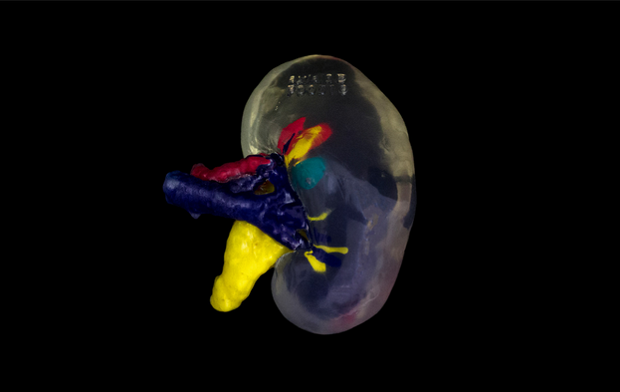
axial3D printed kidney model provides solution to complex procedure

axial 3D kidney mode


A 3D printed kidney model, manufactured by axial3D, has enabled surgeons to successfully perform a complex transplant operation on a young mother in Belfast.

Pauline Fenton, 22, was suffering from end-stage kidney disease and was dialysis-dependant when her father, William, 45, was confirmed to be a suitable living donor, but was blood group incompatible. The discovery of a Bosniak 2F renal cyst on William’s donor kidney further complicated proceedings. Potentially cancerous, it would need treatment before the incompatible transplant could be carried out.

Surgeons at Belfast City Hospital turned to 3D printing for a helping hand, CT scanning the kidney, and printing a replica model. It allowed the surgical team to determine the size and location of the cyst, and plan the procedure accordingly. Once the cyst had been removed, Pauline could then receive the replacement kidney.

“We planned and rehearsed the surgery precisely, using an exact replica of the donor kidney containing the size and position of cyst, so my team knew the precise procedure required in the operating theatre,” commented Tim Brown, Consultant Transplant Surgeon at Belfast City Hospital. “This level of insight is just not achievable with standard pre-operative imaging. This father’s gift of life to his daughter proves the benefit of living organ donation but in this case, I’m certain 3D printing also played a part in helping us to give this young mother an improved quality of life and the opportunity to see her child grow up.”

Belfast-based axial3D were the company on hand to 3D print the replica kidney, harnessing the expertise of its specialist team to deliver an accurate and ultimately life-changing model. The company has long-been promoting the adoption of additive manufacturing within the medical sector, and in recent weeks established a Scientific Advisory Board to oversee its own medical 3D printing activities.

With cost-saving at the forefront of the NHS agenda now more than ever, axial3D believes there’s plenty of scope for 3D printing’s incorporation into state medical centres, and uses the Pauline Fenton case as a prime example. The average cost for a patient on dialysis is more than £30,000 per year, which is reduced to £5,000 post-transplant. 3D printing can mean that price reduction is reached quicker, and safely.

“We work with surgeons with the core aim to improve patient outcomes; reduce operating times and ultimately help advance surgical education and planning for the future,” said Daniel Crawford, Founder of axial3D. “We’re proud that our technology can have profound positive impacts on improving the quality and length of patients’ lives and we’re delighted that our work provided significant benefit for this family.

“It is vital that our amazing surgeons have access to the best and most innovative solutions to support them in planning for very complex procedures. 3D printing offers an exciting opportunity for hospitals to reduce costs, elevate care, and most importantly, improve patient outcomes. Now that 3D prints are available via the NHS in Northern Ireland, we look forward to supporting more surgeons and patients with this technology.”